Medically reviewed by Dr. A.M. van Coevorden, dermatologist, on
Genital herpesPainful blisters caused by the herpes virus that respond well to treatment.
Genital herpes is an STI caused by the herpes virus, the same kind of virus that causes cold sores. Most people who carry the virus do not notice anything.
Reply within 12 to 48 hours · no referral needed · from € 39
- What is genital herpes?
- What does genital herpes look like?
- How do you recognise genital herpes?
- How do you get genital herpes?
- What treatment is available?
- How is genital herpes diagnosed?
- Pregnancy and partners
- What looks similar, but is not herpes?
- When should you see a dermatologist?
- Frequently asked questions
What is genital herpes?
Genital herpes is an STI caused by the herpes virus, the same kind of virus that causes cold sores. Most people who carry the virus do not notice anything.
What does genital herpes look like?
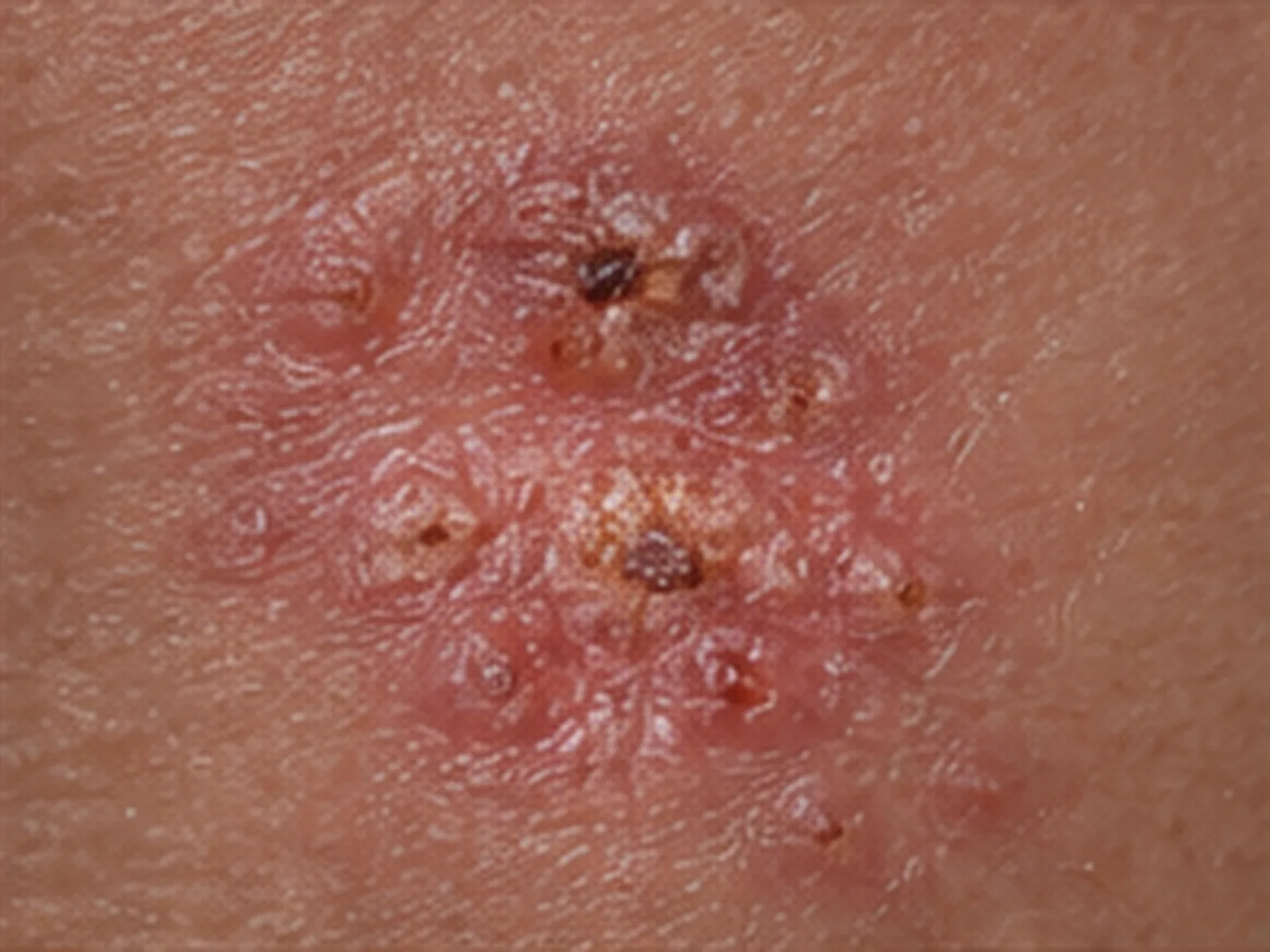
Genital herpes usually starts as a cluster of small blisters on a patch of red skin. The blisters are filled with fluid. They burst on their own and turn into small sores, which usually scab over. During a first outbreak the sores can last two to three weeks. When herpes comes back, the sores usually clear within one to two weeks and are less troublesome than the first time.
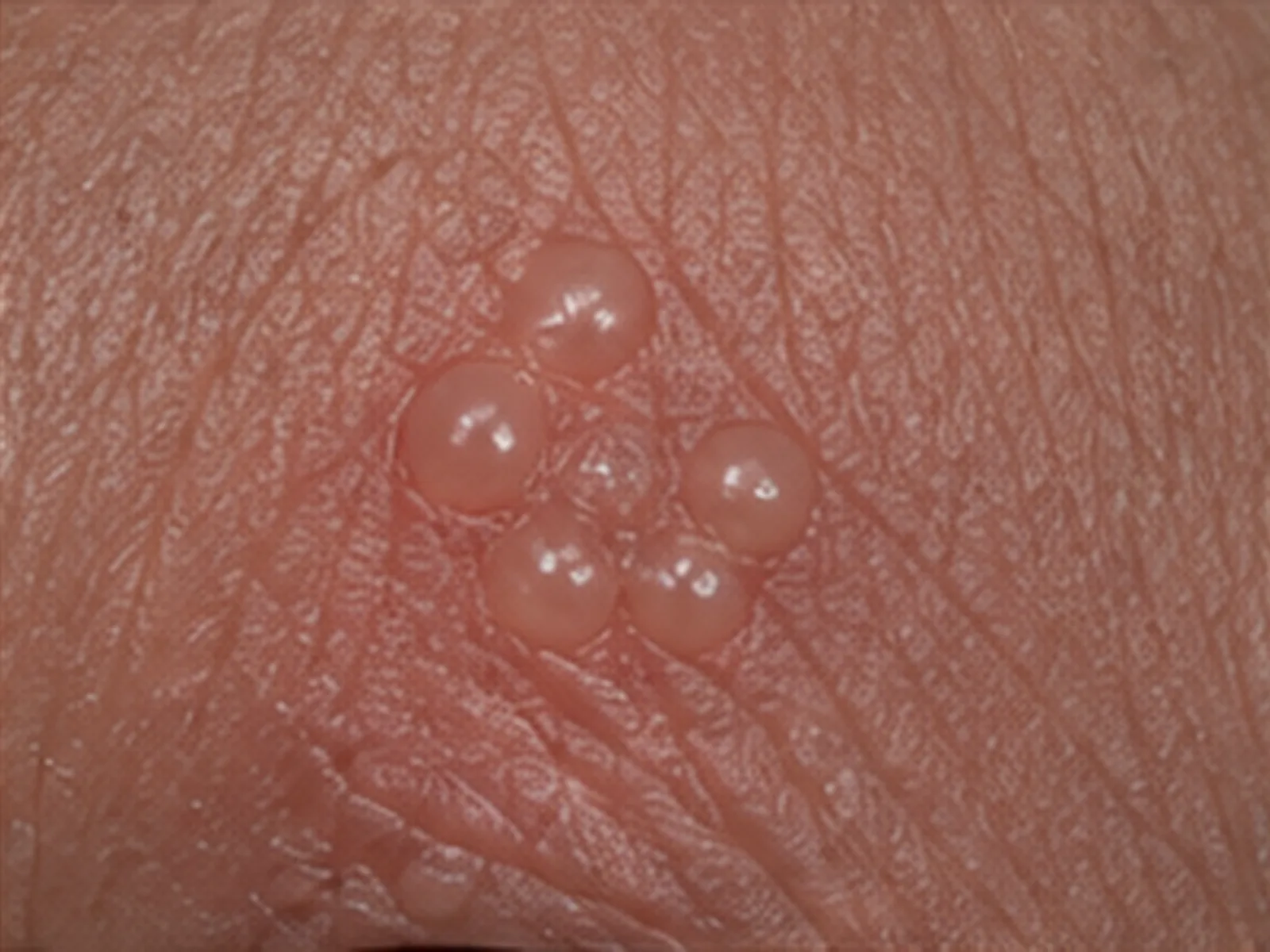
You often feel it coming before the blisters appear: the skin tingles, itches or burns, usually in the same place as before. That warning sign is useful, because treatment works best when you start early.
The sores are usually on or around the genitals: in women on the labia, around the vagina or near the anus; in men, on the penis or near the anus. Herpes can also appear on the buttocks and the upper thighs, and in or around the anus.
How do you recognise genital herpes?
A first outbreak often feels like flu: fever, aching muscles and feeling unwell, together with painful blisters. Passing urine can sting and the glands in the groin can be swollen. Many people never notice their first infection: with the type of virus that most often causes genital herpes, only about one in three people has symptoms the first time. That is why many people do not know they carry the virus.
Recurrent outbreaks are milder and shorter. How often herpes comes back varies a great deal: some people have one outbreak a year, others more. Over the years the outbreaks usually become less frequent and less severe.
How do you get genital herpes?
You get genital herpes through sex with someone who carries the virus: during vaginal, anal or oral sex, through genital contact and through shared sex toys. Blisters contain a lot of virus; once a blister has burst, the virus easily passes into the skin. The virus can also be passed on even when there are no blisters. From time to time it comes to the surface of the skin without you noticing anything. Most infections happen that way, passed on by someone who has no symptoms. A cold sore is the same virus or a close relative of it; through oral sex, a cold sore can cause genital herpes.
After the first infection the virus stays in the body, in the nerves near the site of the outbreak. That is why it can come back. Outbreaks are more common when your immune system is run down, during illness, stress or menstruation, or after friction on the skin.
What treatment is available?
Genital herpes does not go away, but the outbreaks respond well to treatment. During an outbreak with many blisters and sores, antiviral tablets help. The medicines used are valaciclovir, aciclovir and famciclovir. They work best if you start early, ideally within two days of the first symptoms, for example as soon as you feel the tingling. The course is short. Tablets make the outbreak shorter and less severe.
For the pain you can take a painkiller and keep the sores clean and dry. A zinc oxide ointment or a numbing cream containing lidocaine from the pharmacy can bring relief.
If herpes comes back often, around six times a year or more, and it bothers you a lot, the dermatologist may suggest suppressive treatment: a low dose of the same tablets every day, for a longer period. That reduces the number of outbreaks by seventy to eighty per cent and lowers the risk of passing the virus to a partner. Whether that is right for you is something to discuss with the dermatologist.
How is genital herpes diagnosed?
A dermatologist usually recognises genital herpes from its appearance: clustered blisters or sores on a red base, together with your description of the symptoms. If there is any doubt, or during a first outbreak, a swab can be taken from the fluid in a blister or from the base of a sore. The laboratory tests it for the virus (a PCR test). That is the most reliable test. A blood test tells you little about a current outbreak and is only used in special situations, such as pregnancy.
If you got genital herpes after unprotected sex with a new partner, it is sensible to be tested for other STIs as well, through your GP or the GGD, the Dutch municipal health service.
At 247dermatologist the dermatologist assesses your photos and your symptoms. If the diagnosis is clear, you receive treatment advice straight away and a prescription where needed. If a test is needed, the advice tells you where to have it done.
Pregnancy and partners
If you are pregnant and get genital herpes for the first time in the last weeks of pregnancy, tell your midwife or gynaecologist straight away. The virus can pass to the baby during birth, which is why a caesarean section is usually advised in that situation. If you have had herpes before, you can usually give birth normally. Your midwife knows what to do. Herpes does not affect your ability to get pregnant.
Tell your sexual partners that you have herpes. In the Netherlands you can also do this anonymously through partnerwaarschuwing.nl. A condom reduces the risk of transmission, even when you have no symptoms, but it does not remove the risk entirely, because the virus can also be on skin the condom does not cover. During an outbreak, avoid sex until the sores have fully healed.
What looks similar, but is not herpes?
Not every painful spot in the genital area is herpes. The dermatologist also considers:
- Syphilis: usually a single painless ulcer, not a cluster of blisters. Can only be ruled out with a blood test.
- A boil or an inflamed hair follicle after shaving: one or a few red lumps with a pus-filled head, no fluid-filled blisters.
- Small cracks or scratches: line-shaped marks without blisters. Herpes can look like this too, so get tested if in doubt.
- Pubic lice: itching and small red bumps, no blisters or sores.
- Genital warts: bumps that do not go away and are not painful.
Read more about syphilis, boils, folliculitis, pubic lice and genital warts. Photos help to tell these apart. Make sure they are sharp and taken in daylight, ideally while the blisters are still there.
When should you see a dermatologist?
Not sure whether this needs a look? Have a dermatologist assess it: you get an answer within 12 to 48 hours, no referral needed. In an emergency, contact your GP straight away or call 112.
During a first outbreak, especially with fever or pain when passing urine, a quick assessment is worthwhile: that is when treatment works best. The same applies if you are unsure what it is, if it keeps coming back, or if you want to discuss suppressive treatment. Upload your photos discreetly; a registered dermatologist assesses them within 12 to 48 hours and sends a prescription where needed.
Please note
Call your GP or the out-of-hours GP service the same day if: you have a red, painful eye while you have herpes; you are in severe pain or cannot pass urine; it is a first outbreak during pregnancy; or your immune system is seriously weakened.
Have a dermatologist look at your skin
Upload photos and answer a few questions. A BIG-registered dermatologist replies within 12 to 48 hours, no referral needed, from € 39.
If more is needed, the dermatologist refers you to a medical specialist.
Want to know what a dermatologist does, when you can see one and how quickly that can happen? Read more about the dermatologist.
Frequently asked questions
Does genital herpes ever fully go away?
The virus stays in your body, but over the years the outbreaks usually become less frequent and less severe. Tablets shorten an outbreak, and if it keeps coming back, suppressive treatment can greatly reduce the number of outbreaks.
Is genital herpes dangerous?
For most people it is not. During pregnancy, extra care is needed; mention it to your doctor or midwife.
Can herpes appear on your buttocks or thighs?
Yes. The virus sits in the nerves of the lower body and can cause blisters there during an outbreak.
Am I contagious when I have no blisters?
Yes, sometimes. From time to time the virus comes to the surface of the skin without symptoms. The risk is lower than during an outbreak, but not zero.
How do I avoid infecting my partner?
Do not have sex when you have blisters or sores, and talk to your partner about it. A condom reduces the risk of transmission.
Is a cold sore the same thing?
It is the same kind of virus. Through oral sex, a cold sore can cause genital herpes.
What can an online dermatologist do for me?
Assess your skin within 12 to 48 hours, tell you whether it looks like herpes, and give treatment advice with a prescription where needed.
Sources and more information
- Genital herpes (Thuisarts.nl, Dutch)
- Multidisciplinary guideline Sexually transmitted infections, part C4 Genital herpes (NVDV and NVMM, Richtlijnendatabase, Dutch)
- Genital herpes (NHS)
- Genital herpes, dermatology handbook (huidziekten.nl, Dutch)
Related skin conditions
Skin tips from a dermatologist?
Sign up for our newsletter.