Couperose
The dilated vessels can be treated with laser therapy or an intense pulsed light device. Usually two to three treatments are enough. This treatment is not reimbursed. Over the long term, new vessels can appear.
Medically reviewed by Dr. A.M. van Coevorden, dermatologist
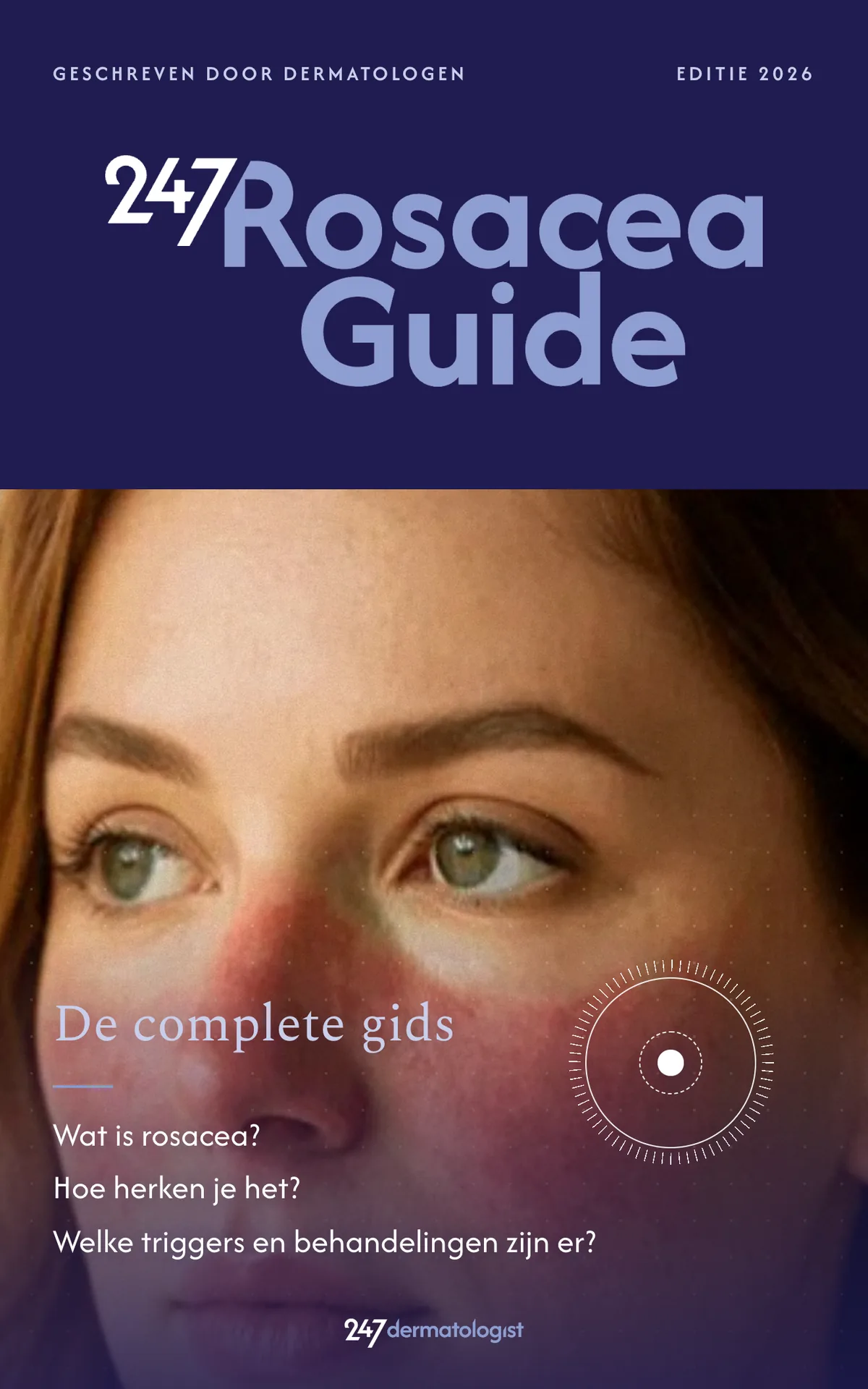
Rosacea is a common chronic skin condition on the face. It affects men and women equally and, very occasionally, children. Rosacea usually starts around the age of 30. The symptoms are usually very treatable, but the condition cannot be permanently cured.
Reply within 12 to 48 hours · no referral needed · from € 39
The cause of rosacea is still unknown. Both hereditary and environmental factors probably play a role. The symptoms can worsen from heat, sunlight, emotions and some cosmetics such as make-up and skincare products.
Some medicines, for example corticosteroids, can cause or worsen rosacea, both when taken by mouth and when applied to the skin. It has never been shown that rosacea is caused by diet. The symptoms can, however, temporarily worsen from alcohol, hot drinks and spicy food.
Rosacea mainly appears on the nose, the cheeks, the forehead and the chin. The main symptoms are:
Many people with rosacea also have eye symptoms. The most common are dry eyes, a burning or stinging feeling, watering eyes and a feeling that something is in the eye. Inflammation of the eyelids (blepharitis) and of the cornea and conjunctiva can also occur. Eye symptoms range from mild to severe.
Less often, swelling of the skin occurs, often on the cheeks below the eyes. Swelling can also develop from an increase in connective tissue. The best-known example is rhinophyma: enlargement of the sebaceous glands on the nose and an increase in connective tissue make the nose thickened and knobbly. Rhinophyma has nothing to do with alcohol use and occurs almost exclusively in older men.
No. Rosacea is not contagious.
Your doctor usually recognises rosacea without further tests, from your symptoms and the skin changes. Sometimes the doctor wants to be sure it is not another skin condition. In that case the doctor can take a small piece of skin (biopsy). The skin is numbed locally before it is removed.
Rosacea is very treatable, but cannot be cured. Within six months of stopping treatment, half of people experience a flare-up again. Mild rosacea is first treated with a cream or gel. If that is not enough, a treatment with tablets or capsules is added. Severe rosacea is treated with both at once.
For a cream or gel, ivermectin cream, metronidazole gel or cream, or azelaic acid cream is usually chosen. For the redness you can try brimonidine gel. This makes the blood vessels contract, which temporarily reduces the redness. If you wish to become pregnant or may be pregnant, discuss this with your doctor. Of the medicines mentioned, only metronidazole can be used safely during pregnancy.
Treatment with antibiotics such as doxycycline, minocycline or tetracycline can have a beneficial effect on the skin and eye symptoms. Improvement is usually seen after one to two months. If antibiotics do not work, isotretinoin can be tried. The antibiotics mentioned above must not be used during pregnancy. Isotretinoin must certainly not be used during pregnancy and must even be stopped two months before a possible pregnancy.
Specific symptoms are treated separately.
The dilated vessels can be treated with laser therapy or an intense pulsed light device. Usually two to three treatments are enough. This treatment is not reimbursed. Over the long term, new vessels can appear.
Keep the eyelids clean daily (eyelid hygiene). For dry eyes you can use artificial tears. Antibiotic tablets may also help. If symptoms persist, a referral to the ophthalmologist is advisable.
Thickening of the nose can be treated with plastic surgery, electrosurgery, cryosurgery or laser therapy.
Certain conditions, foods, irritating factors and medicines can worsen rosacea. These are called triggers. The list is not complete and differs from person to person. It can help to keep a diary to see which factors worsen your symptoms, so you can avoid them as much as possible.
Common triggers for rosacea:
Exercise, climate conditions (cold, heat, humidity, UV, wind), fever, hot flushes, and psychological stress and emotions such as anger, fear and embarrassment.
Alcohol, aubergine, avocado, vinegar, chilli (peppers) and curry, chocolate, citrus fruit, coffee and tea, soy, spinach, tomatoes and dairy products.
Alcohol-based facial cleansers, menthol, perfume and aftershave, peeling products, facial cleansing wipes, shaving foam, waterproof cosmetics and soap.
Capsaicin, corticosteroids, doxorubicin, infliximab, interferon, niacin, nifedipine, nitroglycerin, prostaglandin E and rifampicin.
The facial skin in rosacea is fragile and sensitive. The following tips may help you care for your skin:
The symptoms of rosacea are unpleasant and upsetting because of its appearance and can affect quality of life, such as social and professional functioning. It is important to be open about this with your care provider, so the best treatment can be chosen. Rosacea is very treatable, but with the current medicines it cannot be permanently cured. After stopping treatment, the symptoms can return. A maintenance treatment with a cream or gel can delay a flare-up or worsening.
Not sure whether this needs a look? Have a dermatologist assess it: you get an answer within 12 to 48 hours, no referral needed. In an emergency, contact your GP straight away or call 112.
Rosacea is very treatable, but with the current medicines it cannot be permanently cured. Within six months of stopping treatment, half of people experience a flare-up again. A maintenance treatment with a cream or gel can delay that.
No. It has never been shown that rosacea is caused by diet or alcohol. The symptoms can temporarily worsen from alcohol, hot drinks and spicy food. Rhinophyma, the thickened nose, also has nothing to do with alcohol use.
Triggers are factors that worsen rosacea, such as heat, sunlight, emotions, alcohol and certain cosmetics. Which ones affect you differs from person to person. Keeping a diary can help you recognise and avoid your own triggers.
Sunlight is a common trigger. Avoid sunlight on the face as much as possible and use a daily sunscreen against UVB and UVA with SPF 15 or higher. Products with titanium dioxide or zinc oxide cause the least irritation.
Many people with rosacea also have eye symptoms, such as dry, burning or watering eyes. Keep the eyelids clean daily. If symptoms persist, a referral to the ophthalmologist is advisable.
Upload photos and answer a few questions. A BIG-registered dermatologist replies within 12 to 48 hours, no referral needed, from € 39.
If more is needed, the dermatologist refers you to a medical specialist.
Want to know what a dermatologist does, when you can see one and how quickly that can happen? Read more about the dermatologist.
Sign up for our newsletter.