01 / 06
Inflammatory
Medically reviewed by Dr. A.M. van Coevorden, dermatologist, on
About 13 minutes to read
Acnespots and blackheads
Read what acne is, which types exist and which treatments really work. We explain it step by step.
Reply within 12 to 48 hours · no referral needed · from € 39
- What is acne?
- How does acne develop?
- What triggers acne or makes it worse?
- What types of acne are there?
- What does acne look like?
- Is acne contagious?
- How does your doctor diagnose acne?
- How is acne treated?
- What can you do yourself?
- What does not work, or is not proven?
- Worse first, then better: the first weeks
- Preventing scars and marks
- Does acne go away?
- Acne and your mood
- Acne-like rash during cancer treatment
- Frequently asked questions about acne
What is acne?
Acne is an inflammation of the skin with pimples and blackheads, also known as spots. It is one of the most common skin conditions in the world. Almost everyone develops acne during puberty. For some people, it is limited to a few pimples; for others, it is more widespread and has a greater impact. Acne can continue after puberty or start in adulthood. It is a visible condition that can be quite distressing and may cause psychological distress.
How does acne develop?
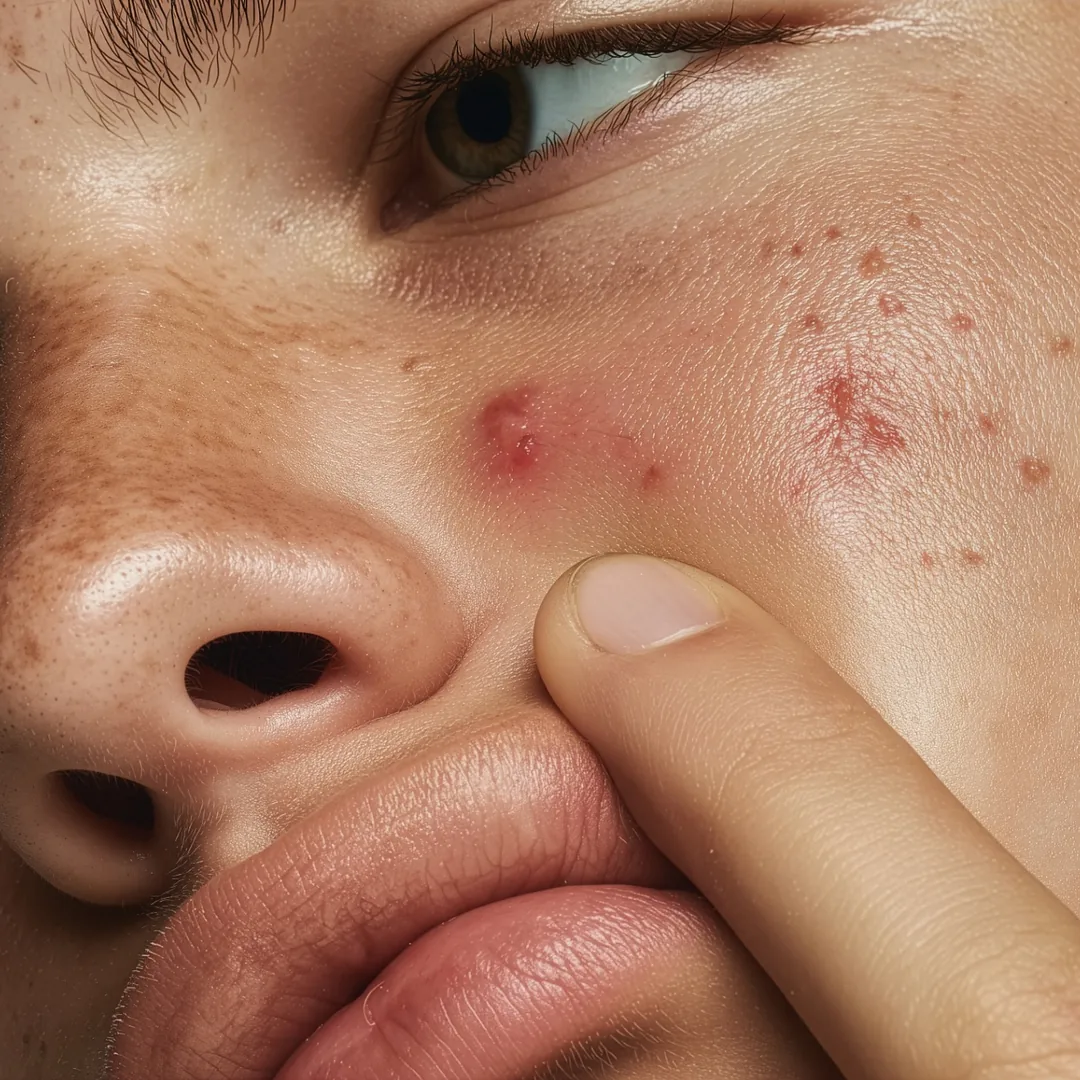
Acne is an inflammation around the hair follicles and sebaceous glands. Various factors cause a follicle to become blocked. This is how blackheads (comedones) form. A blocked follicle contains bacteria, and inflammation can follow. Sometimes this inflammation is severe. That is called acne conglobata, and it mainly affects men.
External factors can also contribute to acne. For example, make-up and oil-based products can block hair follicles. Medicines and supplements can cause or worsen acne too, for example vitamin B12.
Acne is not caused by poor hygiene or a vitamin deficiency. There is little evidence that a specific diet or supplements improve acne. The advice is to eat a varied and healthy diet.
What triggers acne or makes it worse?
Acne rarely has a single cause. Hormones and genetic predisposition are the main causes. There are also factors that can trigger acne or make it worse.
- Hormonal fluctuations. For example during puberty, around your period, during pregnancy, during menopause, or after stopping or switching contraception.
- Persistent stress. The stress hormone cortisol stimulates the sebaceous glands.
- Make-up and oil-based products. These can block hair follicles.
- Medicines and supplements. Some can cause or worsen acne, for example vitamin B12. During treatment with prednisolone an acne-like rash can develop, which looks like acne but often has no blackheads.
- Diet, for some people. Research has found a link between acne and foods with a high glycaemic load: lots of sugar, white bread, soft drinks and other rapidly digested carbohydrates. Milk is also linked to acne in some studies. These are associations at group level, not proof that it works this way for everyone.
What is not a cause: poor hygiene or a vitamin deficiency.
What types of acne are there?
Not all acne looks the same, and that difference matters: the type of acne determines which treatment makes the most sense. Acne vulgaris is the most common form and the umbrella term for acne caused by blocked sebaceous glands.
Comedonal acne. Mainly open and closed comedones and little inflammation.
Hormonal acne. Spots that follow hormonal fluctuations, often on the jawline, chin and cheeks.
Inflammatory acne. Red, swollen pimples and pustules with a white or yellow head. With this presentation, early treatment can make a big difference.
Cystic acne. A severe form in which the inflamed lesions lie deep within the skin, with large, red and painful bumps.
Acne conglobata. A rare, very severe form in which inflammations merge into large abscesses.
There are also two presentations that work slightly differently. In acne excoriée, picked spots and small wounds are the most noticeable features. And when acne first appears after the age of twenty-five, we call it acne tarda, also known as adult acne.
What does acne look like?
Acne consists of blackheads (comedones), red bumps and pimples. A blackhead is a white or black bump on the follicle, a build-up of dead skin cells. Sometimes larger inflammations (abscesses) develop. Scars can remain after healing. The more severe and the longer the acne lasts, the greater the risk of scarring.
Acne is not limited to the face. The back, chest and shoulders are the next most common areas. About half of the people with facial acne also have acne on the trunk.
Acne can look different on different skin tones. On lighter skin an inflammation can look bright red or pink. On darker skin the redness can be more subtle, and dark marks after an inflammation can be more noticeable.
Is acne contagious?
N
No. Acne is not contagious.
How does your doctor diagnose acne?
Your doctor usually recognises acne straight away from the skin. Extra tests are almost never needed. The severity is assessed from the number of bumps and pimples and how widespread it is: mild, moderate or severe. Whether there are scars also counts.
How is acne treated?
Dermatologists treat acne step by step. First topical treatments, then stronger options through a doctor if these are not enough. Which treatment is suitable for you? This depends on the type of acne, the severity and the risk of scarring. We are also cautious with antibiotics: only when needed, always combined with a topical treatment, and always for a limited period.
Acne almost always needs long-term treatment. There are several options. Depending on the cause, acne cannot always be cured. Usually it is possible to calm the acne and keep it calm until it clears on its own.
Treatment often starts with a cream, gel or lotion. This is often a combination of ingredients that exfoliate and work against bacteria and inflammation. Examples are benzoyl peroxide, retinoids (such as tretinoin and adapalene) and antibiotics (such as clindamycin). Sometimes a course of antibiotics is added. The most commonly used is doxycycline. This treatment is often given for 3 months.
For severe acne, a tablet treatment with isotretinoin is started. This medicine contains an ingredient derived from vitamin A. Isotretinoin reduces sebum production and reduces the hardening of the skin, so the ducts of the sebaceous gland and follicle are less likely to become blocked. It also suppresses inflammation. The most common side effect is dryness of the lips, the lining of the nose, the eyes and the skin. Liver test results and blood lipid levels can sometimes rise during treatment. Regular blood tests are therefore needed. Isotretinoin carries serious risks during pregnancy. Women and girls must therefore not become pregnant during treatment and, if of childbearing age, must take a monthly pregnancy test. This treatment lasts an average of 9 months, but this varies from person to person. You can read more about this treatment on our isotretinoin page.
The contraceptive pill can also reduce sebum production and so have a beneficial effect on acne. It is recommended for women who already want to use the pill alongside their acne treatment. Your doctor will discuss this with you.
Your doctor can also refer you to a skin therapist for skincare advice and supportive treatments. Acne can affect your mood. Psychological support can help some people.
What can you do yourself?
- Do not squeeze pimples and blackheads. The pressure pushes sebum into the skin, which causes more inflammation and makes the acne worse.
- Wash your skin with lukewarm water, without scrubbing. Use a soap-free wash or syndet.
- Avoid oil-based products.
- Sunlight (UV) can temporarily improve acne, but be careful not to spend too much time in the sun. Too much sun thickens the skin, which actually creates more blackheads, and increases the risk of skin cancer. Take extra care with sunlight during some acne treatments, such as isotretinoin and certain antibiotics like doxycycline. These make your skin more sensitive to sun and UV.
- Do not use greasy, occlusive cream or make-up. It blocks the follicles and causes more blackheads and pimples. If you do wear make-up, choose oil-free products and remove them at the end of the day.
What does not work, or is not proven?
Stubborn myths surround acne. Here is what the research shows.
- Chocolate and fatty foods. Never convincingly shown to cause acne.
- Detox regimes and supplements. They do not cure acne. Supplements only make sense with a proven deficiency.
- Strict dieting for your skin. That is never necessary. A healthy diet supports your skin, but it is not a treatment.
- Washing too often or too hard. That can actually irritate the skin. Wash with lukewarm water and a soap-free cleanser.
- Toothpaste on a spot. Toothpaste is not a treatment: it dries out the skin and can cause irritation.
- Sunbeds or lots of sun as a treatment. Sunlight can temporarily improve acne, but too much sun thickens the skin, which actually creates more blackheads, and increases the risk of skin cancer.
Worse first, then better: the first weeks
Many acne treatments require an adjustment period. In the first two to six weeks your skin can be drier, redder and more sensitive than usual. Some people even see slightly more pimples at first. That is well known and passes.
The effect of an acne treatment is only assessed after six to twelve weeks. So do not stop too early: most people who give up do so just before the result becomes visible.
Please note
Blisters, severe pain, or spreading swelling and redness are not expected. Stop applying and contact your doctor.
Preventing scars and marks
An inflamed pimple damages the connective tissue in the deeper layer of the skin. Usually the skin repairs this neatly. But when the inflammation sits deep or lasts long, the repair sometimes goes wrong. A small pit forms in the skin, or a thickened area. That is a scar, and it no longer disappears on its own.
Red or dark marks left after a pimple are not scars but pigment changes. Those usually do fade.
The most important predictor is time. The longer an inflammation stays active, the greater the chance of permanent damage. Early treatment is therefore the best scar prevention there is. Beyond that, leave pimples alone, do not use aggressive scrubs and protect your skin from the sun during the day, because sunlight makes discolouration darker and more stubborn.
Does acne go away?
For many people acne calms down over the years. Depending on the cause, acne cannot always be cured, but it is usually possible to calm the skin and keep it calm until it clears on its own.
Important to know: a treatment suppresses the process in your skin, but does not take away the predisposition. Stop treatment suddenly, and the pimples often start again within weeks to months. That is why maintenance is usually a light continuation of your treatment, at a lower frequency. If you want to reduce or stop, do it step by step and in consultation with your doctor.
Acne and your mood
Acne is a visible condition that can be quite distressing and may cause psychological distress. Acne can affect your mood. Psychological support can help some people. If your skin weighs on you, mention it in your consultation, and the dermatologist will look at what helps.
Acne-like rash during cancer treatment
Some cancer treatments cause a side effect that looks like acne. Yet it is slightly different: ordinary spots mainly appear during puberty and come with blackheads. This skin side effect can occur at any age and often has no blackheads. That is why it is called an 'acne-like rash'.
You can develop this side effect during treatment for cancer with certain medicines. This is mainly with newer cancer treatments such as eGFR, MEK and mTOR inhibitors. It can also result from supportive treatment with prednisolone. With chemotherapy, an acne-like rash is a rare side effect. The rash often appears in the first 4 weeks after the treatment starts, with red bumps and pimples on sun-exposed areas and on parts of the body with many sebaceous glands.
N
Do not use standard 'acne treatments' such as benzoyl peroxide, tretinoin, adapalene or tazarotene for an acne-like rash caused by cancer treatment, because these dry out the skin even more. If in doubt, consult your doctor.
This information is based on guidance from the EADV Dermatology for Cancer Patients Task Force.
Sources and more information
- NVDV patient leaflet Acne vulgaris, version 2022
- NVDV patient leaflet Acne-like rash during cancer treatment (EADV), version 2022
- NVDV Acne Vulgaris guideline, 2022 revision
- NHG Practice Guideline Acne
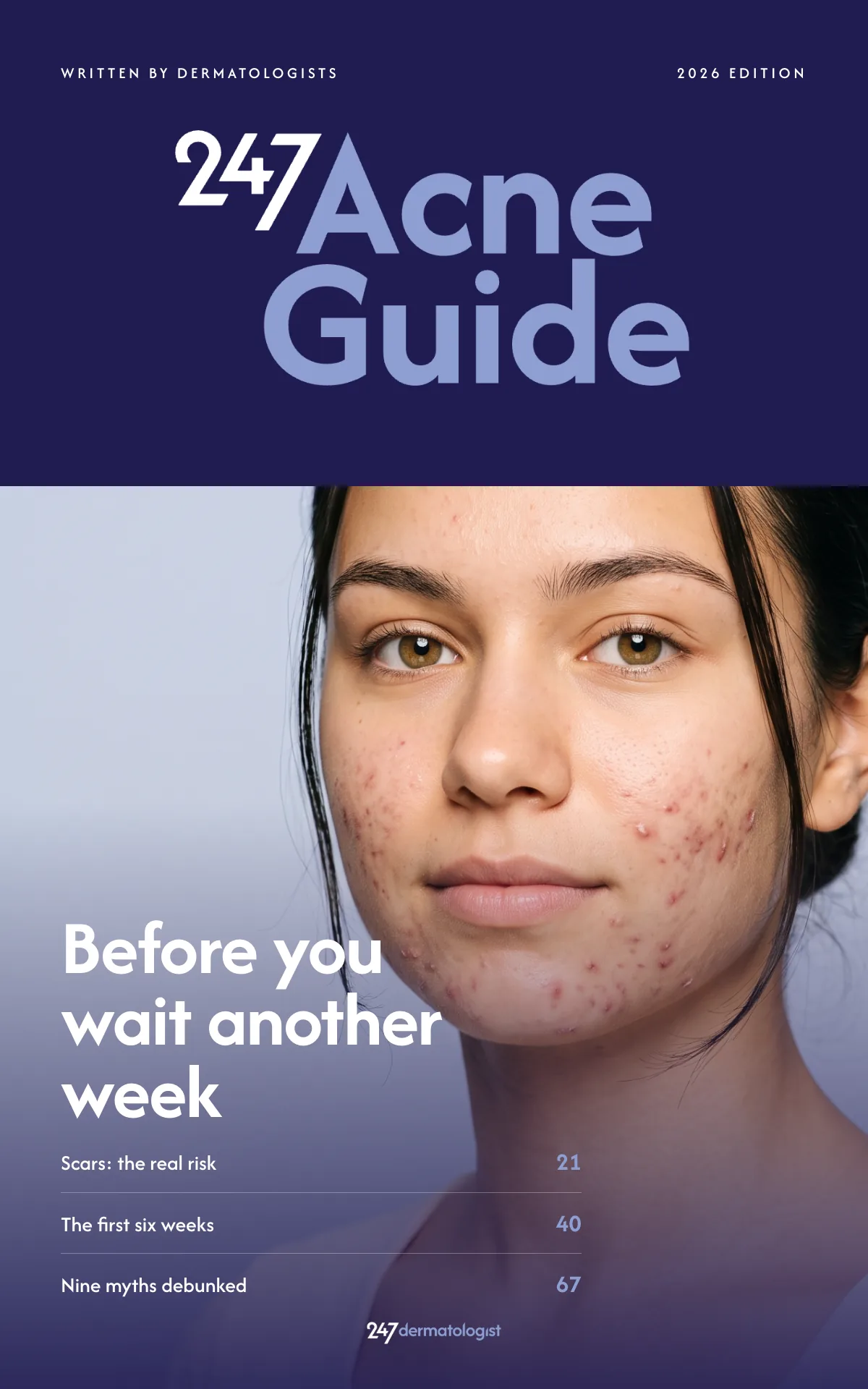
- The Acne Guide 2026, 247dermatologist
Sources: Dutch Society of Dermatology and Venereology (NVDV) and NHG.
The Acne Guide
True or false.
Six statements about acne. Choose your answer and read what our dermatologists say.
Frequently asked questions about acne
Not sure whether this needs a look? Have a dermatologist assess it: you get an answer within 12 to 48 hours, no referral needed. In an emergency, contact your GP straight away or call 112.
Is acne caused by poor hygiene?
No. Acne is not caused by poor hygiene or a vitamin deficiency. Washing too often or too hard can actually irritate the skin. Wash with lukewarm water and a soap-free cleanser.
Does diet help against acne?
There is little evidence that a specific diet or supplements improve acne. The advice is to eat a varied and healthy diet.
Can I squeeze pimples?
No. The pressure pushes sebum into the skin, which causes more inflammation and makes the acne worse. Squeezing also increases the risk of scarring.
How long does acne treatment take?
Acne almost always needs long-term treatment. A course of antibiotics such as doxycycline is often given for 3 months, and a tablet treatment with isotretinoin lasts an average of 9 months. This varies from person to person.
Can acne be cured?
Depending on the cause, acne cannot always be cured. Usually it is possible to calm the acne and keep it calm until it clears on its own.
How do you get rid of acne fast?
Acne treatment takes time. The effect of an acne treatment is only assessed after six to twelve weeks. What can happen quickly: finding out today which treatment fits your type of acne, so you do not lose weeks on products that make no sense for your skin.
What causes acne?
Hormones and genetic predisposition are the main causes. Various factors cause a hair follicle to become blocked, after which bacteria and inflammation start to play a role. Acne is not caused by poor hygiene or a vitamin deficiency.
Which treatments work for acne?
A treatment that fits your type of acne. Dermatologists work in steps: first topical treatments such as benzoyl peroxide and retinoids, then stronger options through a doctor if these are not enough. What fits you depends on the type of acne, the severity and the risk of scarring.
What types of spots are there?
From blackheads (comedones) to red pimples and pustules with a white or yellow head, and from deep painful bumps to merging inflammations. The presentation determines the treatment. The section on the types of acne lists the five presentations we see most often.
Why do I get spots as an adult?
Acne can continue after puberty or start in adulthood. When it first appears after the age of twenty-five, we call it acne tarda. A hormonal component is often involved, for example after stopping the pill. There is often a genetic component too. Read more on the acne tarda page.
Does prednisone affect acne?
It can. During treatment with prednisolone an acne-like rash can develop. It looks like acne, but often has no blackheads and needs a different approach. Never stop a prescribed medicine on your own and consult your doctor if in doubt.
What can I do about acne after pregnancy?
Hormonal fluctuations around a pregnancy can trigger or worsen acne. The skin often calms down afterwards, but that can take a while. If the acne persists, it responds well to treatment. If you are breastfeeding, mention it in your consultation, and the dermatologist will take it into account when choosing the treatment.
What is the difference between a cyst and a pimple?
An ordinary pimple sits at the surface and often has a white or yellow head. A cyst lies deep in the skin: a large, red and painful bump that can be filled with pus, where the pain can be present even without touching the skin. Deep inflammations carry a higher risk of scarring, so have them assessed in time.
Does sunlight help against acne?
Sunlight can temporarily improve acne, but too much sun thickens the skin, which actually creates more blackheads, and increases the risk of skin cancer. Take extra care with sunlight during some acne treatments, which make your skin more sensitive to sun and UV.
Can spots cause scars?
Yes. When an inflammation sits deep or lasts long, the repair can go wrong and a pit or thickened area remains. The longer an inflammation stays active, the greater that chance. Early treatment is the best scar prevention. Red or dark marks, by the way, are not scars but pigment changes, and those usually fade.
Have a dermatologist look at your skin
Upload photos and answer a few questions. A BIG-registered dermatologist replies within 12 to 48 hours, no referral needed, from € 39.
If more is needed, the dermatologist refers you to a medical specialist.
Want to know what a dermatologist does, when you can see one and how quickly that can happen? Read more about the dermatologist.
NEWSLETTER
Skin tips from a dermatologist?
Sign up for our newsletter.
New skin guides reach you first.