Is this still normal?
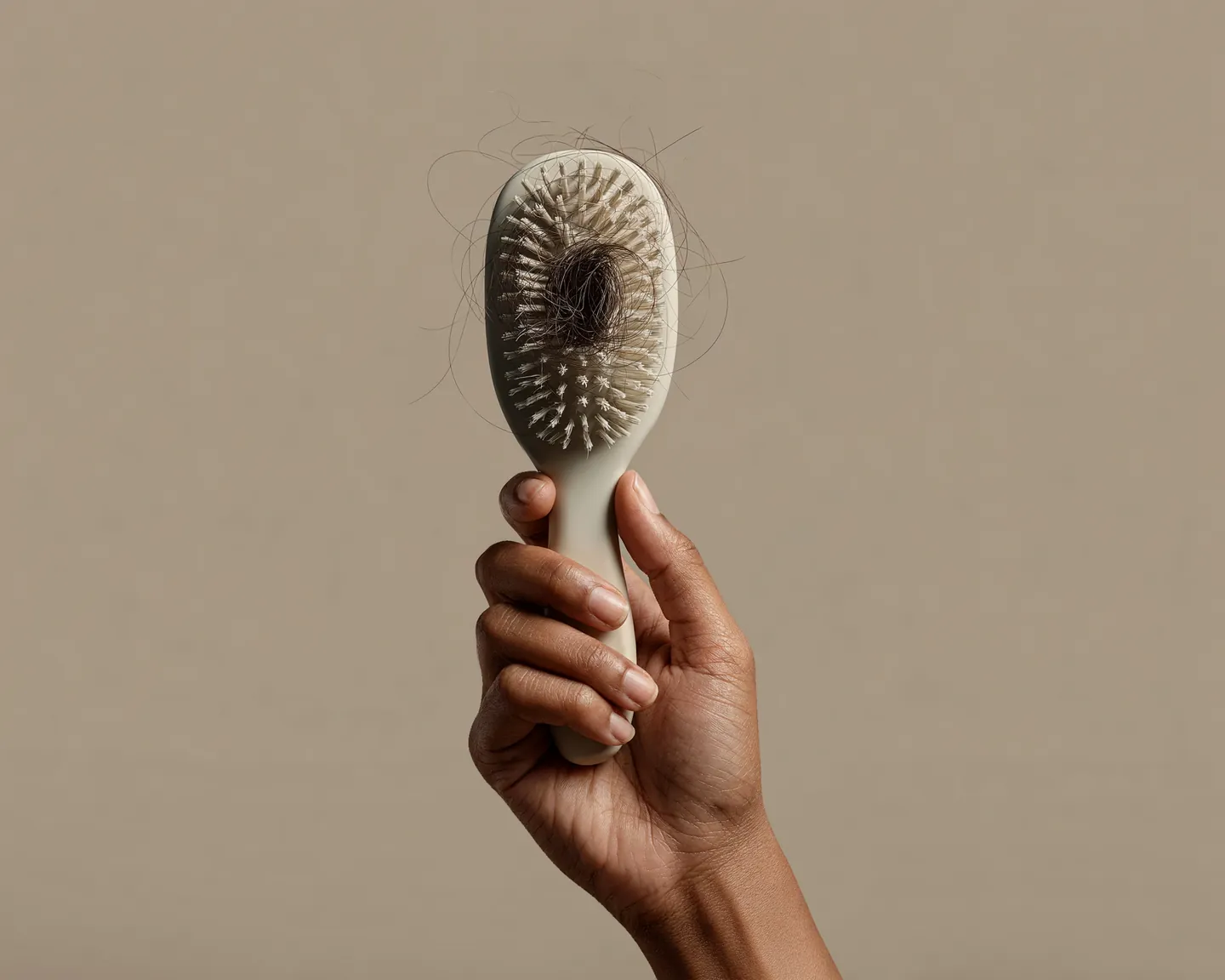
Everyone loses hair. Around 50 to 100 hairs a day. That is simply part of the natural growth cycle of your hair.
But have you noticed that you have been losing far more hair than usual for a few weeks? Is your hair visibly thinner, is your parting changing, or are bald patches appearing? Then it is worth having someone assess what is going on.
Because hair loss is not one condition. And what helps depends on the cause.
Which type of hair loss do you have?
Hereditary hair loss
The most common type of hair loss in both men and women. The hair slowly becomes thinner, for example at the temples, on the crown or around the parting.
Telogen effluvium
With this type you lose more hair than usual over a relatively short period. It can follow a period of stress, illness, childbirth or a change in medication. The hair loss often only begins a few months later.
Alopecia areata
In alopecia areata one or more bald patches usually appear quite suddenly. It is an autoimmune condition in which the immune system attacks the hair follicles.
Another cause?
A tight hairstyle, thyroid problems, iron deficiency, certain medicines, scalp conditions or scarring can also cause hair loss.
Different types of hair loss can look quite similar. A dermatologist can assess what is most likely going on and which treatment fits.
Hair loss in men

In many men hair loss is hereditary. The hair follicles are sensitive to the hormone DHT, which makes the hairs thinner and shorter over time. It often starts at the temples or the crown and gradually increases over the years.
You do not have to do anything about it, of course. But if you notice your hair thinning and you want to know whether the process can be slowed down, there are treatments for that.
Finasteride and minoxidil are two of the best studied options for hereditary hair loss. They can be effective, but they are not suitable for everyone.
That is why it matters to establish first whether you really do have hereditary hair loss.
That may sound obvious, but online you can increasingly order medication straight after filling in a short questionnaire. While there can be other causes of hair loss.
At 247dermatologist a dermatologist therefore looks at your situation first. You send in photos and answer a number of questions about your symptoms. A BIG-registered dermatologist then assesses what is most likely going on.
A dermatologist specialises in skin and hair, so they also watch for signals that point to another cause. Think of sudden hair loss, bald patches, itching, flaking or abnormalities of the scalp.
Within 12 to 48 hours you receive a diagnosis where possible and personal treatment advice.
Is medication right for you? Then the dermatologist can prescribe it. The prescription goes to a pharmacy of your choice, where the dosage and possible interactions with other medicines are checked as well.
247dermatologist does not sell medicines and does not earn anything on the medication that is prescribed. So the dermatologist advises the treatment that suits your situation best from a medical point of view.
Hair loss in women
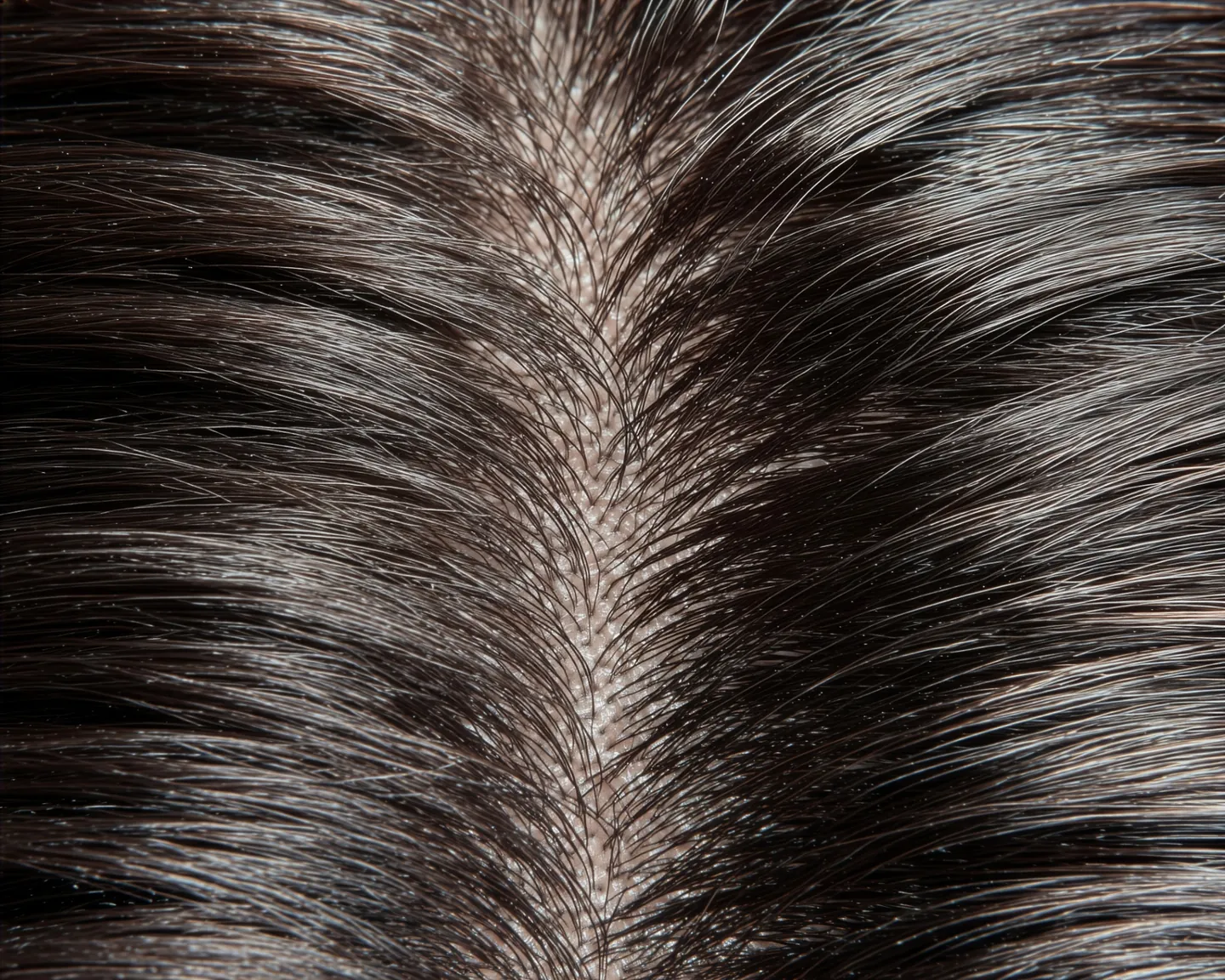
Hair loss in women rarely starts with an obvious bald patch. Often you notice it first in small changes.
You may notice more hairs in your brush or in the shower drain. Your ponytail feels thinner than it used to. Or you suddenly see in a photo that your parting looks wider.
That can leave you feeling unsure. And it is often hard to work out on your own what exactly is going on.
Hair loss is common in women and can have various causes.
With hereditary hair loss the hair often becomes gradually thinner on top of the head and around the parting. But hormonal changes can play a part too, for example after childbirth or during the menopause.
Thyroid problems, iron deficiency, stress, illness or strict dieting can also cause hair loss. Sometimes you only notice it months later.
It is tempting to try all sorts of supplements, shampoos or hair serums yourself. But what helps depends above all on the cause.
An iron deficiency calls for a different approach than hereditary hair loss. And a scalp condition is treated differently again from hair loss caused by hormonal changes.
At 247dermatologist you send in photos and answer a number of questions about your symptoms. A BIG-registered dermatologist then assesses what is most likely going on.
Within 12 to 48 hours you know more about the possible cause, whether further testing is worthwhile and which treatment suits you.
If medication is needed, the dermatologist can prescribe it. But sometimes no treatment is needed at all and the hair is expected to recover on its own. That is worth knowing too.
What can you expect from treatment?
Hair grows slowly, around one centimetre a month on average. So it is not realistic to expect much difference within a few weeks.
With most treatments it takes several months before you can properly judge whether they are having an effect.
Worth knowing too: with many treatments the effect lasts as long as you keep using the product. If you stop, the hair loss can gradually return.
For supplements such as biotin the scientific evidence in hair loss is limited or mixed. They are mainly useful when a deficiency has actually been established.
Considering a hair transplant? Here too it is wise to have the cause of your hair loss assessed first. A transplant is mainly worthwhile in hereditary hair loss that is stable enough.
Finasteride and minoxidil: what you need to know
Finasteride and minoxidil are among the best studied treatments for hereditary hair loss.
They can work well, but they also have limitations and possible side effects. That is why it matters to assess beforehand which product, if one is needed at all, suits you.
Finasteride
Finasteride is a prescription-only tablet that reduces the action of the hormone DHT. This can slow down hereditary hair loss in men.
As with any medicine, side effects can occur. Known side effects of finasteride include sexual ones, such as reduced sex drive or erection problems. In some cases these side effects can persist after treatment stops. Low mood can also occur.
Since 2025 the European patient information leaflet has been tightened. If you develop depressive thoughts or thoughts of suicide while using it, stop the medicine and contact a doctor.
Finasteride is not a standard treatment for women. Women who are pregnant or who may become pregnant must not come into contact with broken finasteride tablets. The medicine can harm the development of an unborn child.
Minoxidil
Minoxidil is available among other forms as a lotion or foam for the scalp and can be used by both men and women.
The most common side effects are scalp symptoms, such as itching, irritation or dryness. Unwanted hair growth sometimes appears in other places. That usually disappears again after stopping.
In the first few weeks it can look as though you are actually losing more hair. This can happen because old hairs make way for new ones and is usually no reason to stop.
If you stop minoxidil for good, the effect gradually disappears as well. The hair loss can then return to its earlier level within a few months.
Are you pregnant or breastfeeding? Then do not start without discussing it with a doctor.
Which treatment is suitable depends not only on the type of hair loss, but also on your health and any other medicines you take. That is why a medical assessment beforehand matters.
Myths and facts about hair loss
A lot is said and written about hair loss. But not everything you come across online is true.
A cap, hat or helmet makes you go bald
No. A cap, hat or helmet does not suffocate your hair follicles.
What can cause hair loss is prolonged pulling on the hair, for example from tight braids, extensions or a tight bun. This is called traction alopecia.
Washing your hair often causes hair loss
No. The hairs you see coming out while washing were already loose. Washing itself does not damage the hair root.
You only inherit baldness from your mother
No. Hereditary hair loss is influenced by several genes. You can inherit those from your father as well as your mother.
Caffeine shampoo and supplements stop hereditary hair loss
There is not enough good scientific evidence for that at the moment.
Supplements can be useful when a deficiency has actually been established, but they are not a general treatment for hereditary hair loss.
There are products that work just as well but have no side effects
That sounds appealing, but unfortunately it is not that simple.
A treatment that genuinely affects processes in the body can also have side effects. That does not automatically make a product unsafe. It does mean you should be able to weigh up the possible benefits against the drawbacks together with a doctor.
Once you start treatment you can never stop
You can always stop.
With many treatments the effect simply disappears gradually afterwards. The hair loss can then increase again.
That does not mean you are addicted to the treatment. It simply means the product stops working as soon as you stop using it.
Need medication? Our dermatologist can prescribe it
Some medicines for hair loss are only available on prescription. That is not without reason: effective medicines can also have side effects and are not suitable for everyone.
So a doctor first assesses whether a medicine is a good and safe choice in your situation.
247dermatologist is a licensed healthcare provider. If the dermatologist concludes after assessment that medication is suitable for you, a prescription can be issued.
That prescription goes to a pharmacy near you or to an online pharmacy of your choice.
The pharmacy checks the dosage and possible interactions with other medicines, among other things. You receive a registered medicine with an official patient information leaflet.
That matters. The Dutch government warns about medicines offered online outside the official medicines chain. These can be counterfeit, for example, or have a different composition from the one promised.
247dermatologist does not sell medicines and does not earn anything on the medication that is prescribed.
You pay for the consultation and the medical assessment by a dermatologist. A prescription is only issued when it is medically appropriate.
Send your photos in today and you will have an answer from a BIG-registered dermatologist within 12 to 48 hours.
start a consultationhow it works
A specialist assessment in three simple steps.
Your consultation, diagnosis and treatment plan are all in English.
Upload photos & describe your concern
Straight from your phone. A few sentences are enough. Your photos are treated with strict confidentiality.
A BIG-registered dermatologist reviews your case
A BIG-registered specialist reviews your photos and questionnaire and makes a diagnosis where possible.
Your treatment plan, within 12 to 48 hours
Delivered in the app. You can always reply to a question from your dermatologist. With chat (€29), you can ask your own follow-up questions for 24 hours, from your report or the purchase of chat, whichever is later.

BIG-registered dermatologist
responding now
WTZA-licensed Dutch healthcare providerBIG-registered dermatologistsfrom €39
One consultation, three response times. You choose.
The same BIG-registered dermatologist, the same careful assessment. The price depends on your chosen response time.
- Diagnosis by a BIG-registered dermatologist
- Personalised treatment plan
- A prescription if needed, to use at your own pharmacy. If you live in the Netherlands, you can also choose free home delivery via our partner pharmacy.
- Care is also available in the evenings, at weekends and on public holidays.
Your choice: 247 fast · answer within 24 hours · €59
start a consultationWTZA-licensed Dutch healthcare providerBIG-registered dermatologistssecure paymentno referral needed
Frequently asked questions
How many hairs a day is it normal to lose?
When should I see a dermatologist about hair loss?
Can stress cause hair loss?
Does finasteride really help against hair loss?
What are the side effects of finasteride?
What are the side effects of minoxidil?
Is minoxidil available without a prescription?
Can the dermatologist prescribe medicines for hair loss?
Is it safe to order finasteride without a prescription?
Do supplements such as biotin help against hair loss?
When will I see results from a treatment?
Can hair loss in women be treated?
What does a consultation for hair loss cost?
Is treatment for hair loss reimbursed?
Sources
- NVDV, patient information alopecia areata
- NVDV, Guideline alopecia areata 2024
- Huidinfo.nl, androgenetic alopecia, information from the dermatologist
- NVDV, androgenetic alopecia
- Dutch government, buying medicines online
- Apotheek.nl, finasteride
- Apotheek.nl, minoxidil on the skin
- CBG, finasteride measures 2025
Medically reviewed by Dr. A.M. van Coevorden, dermatologist
Medically reviewed on 23 August 2026.
Skin tips from a dermatologist?
Sign up for our newsletter.