Dry skin
Skin that holds too little moisture because of a shortage of skin lipids in the top layer.
Medically reviewed by Dr. A.M. van Coevorden, dermatologist
In winter, heating produces dry air, which draws extra moisture from the skin. Cold can also trigger chilblains on the toes and fingers, and wheals. On this page you can read which skin problems are more common in winter, what you can do yourself and when to see a dermatologist.
Reply within 12 to 48 hours · no referral needed · from € 39
The top layer of the skin, the horny layer, prevents moisture from escaping the body. When there are too few skin lipids in this layer, the skin loses more moisture. In a mild form this causes flaking skin, in a more pronounced form the skin becomes eczema-like with sometimes cracks.
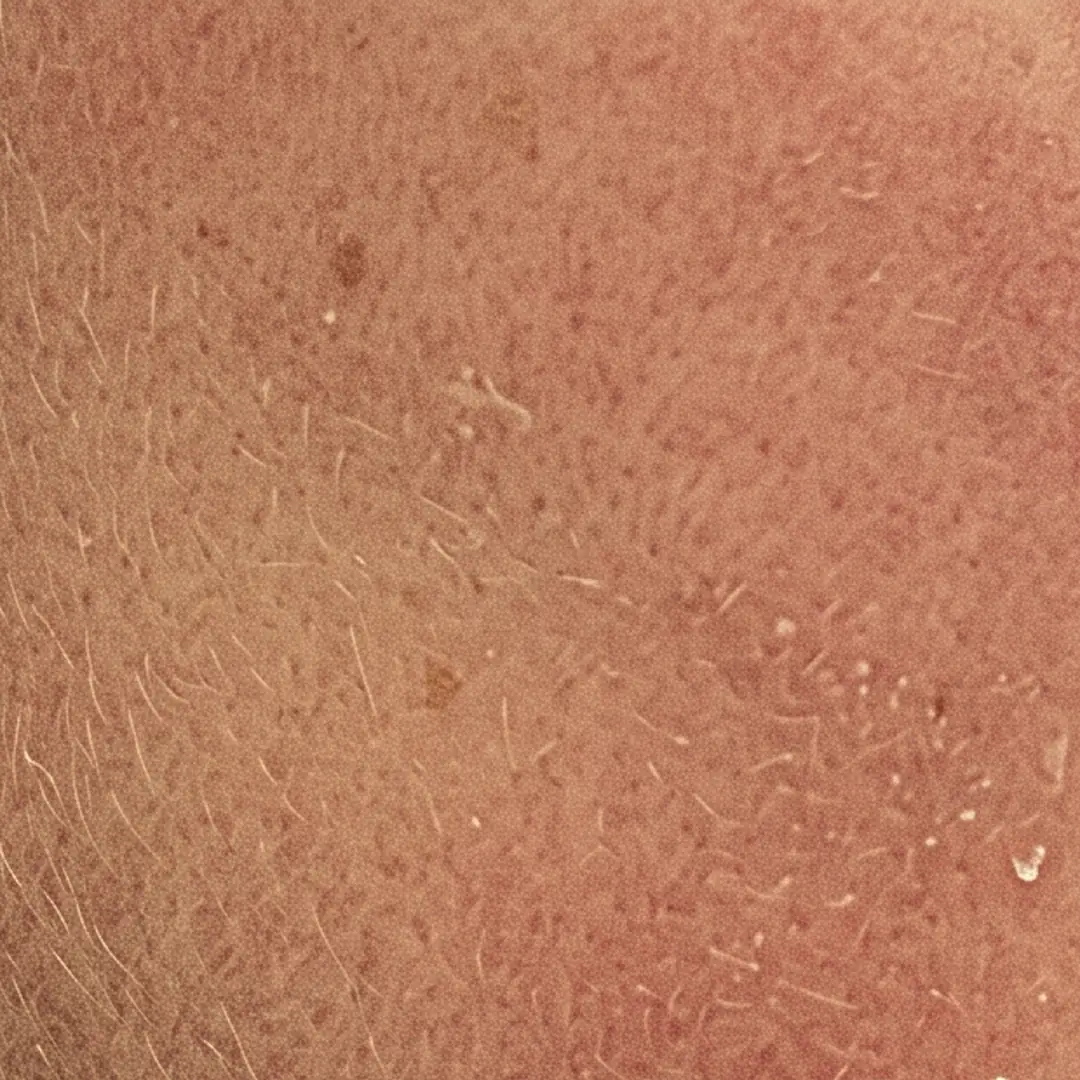
In winter, heating produces dry air, which draws extra moisture from the skin. Keratosis pilaris is often more prominent in winter, when the skin is drier.
Cold itself also plays a part. In autumn and winter, especially in chilly, damp weather, the blood vessels in the skin react abnormally in some people. This is how chilblains develop. With cold urticaria, wheals appear where the skin cools down.
Skin that holds too little moisture because of a shortage of skin lipids in the top layer.
An inflammation of the skin on the hands with itch, redness, flaking and sometimes blisters or cracks.
An umbrella term for skin conditions in which the skin becomes inflamed, with itching, redness and flaking.
Red to purple, itchy or painful patches on the toes or fingers, caused by an abnormal reaction of the small blood vessels to cold.
Small, rough bumps, mainly on the upper arms and thighs, that are often more prominent in winter.
Wheals where the skin cools down, for example when swimming in cold water.
Read more about dry skin, hand eczema, eczema, chilblains, keratosis pilaris and hives.
Not sure whether this needs a look? Have a dermatologist assess it: you get an answer within 12 to 48 hours, no referral needed. In an emergency, contact your GP straight away or call 112.
A dermatologist is the medical specialist for the skin. Have your skin assessed if:
Not sure what it is? A dermatologist at 247dermatologist assesses your photos and tells you what to do. No referral needed.
Urgent care is rarely needed in dermatology: we assess your symptoms and refer you on if needed.
Upload photos and answer a few questions. A BIG-registered dermatologist replies within 12 to 48 hours, no referral needed, from € 39.
If more is needed, the dermatologist refers you to a medical specialist.
Want to know what a dermatologist does, when you can see one and how quickly that can happen? Read more about the dermatologist.
Because heating produces dry air, which draws extra moisture from the skin.
Regular use of a neutral greasy cream or ointment, especially after every wash, and avoiding irritants. For inflammation the doctor often prescribes a corticosteroid.
It is the same condition. On the feet the patches sit on the toes, on the hands on the fingers. The cause and the approach are the same.
Sign up for our newsletter.