
Medically reviewed by Dr. A.M. van Coevorden, dermatologist
Pressure soresSkin damage caused by pressure and often preventable.
Pressure sores, also known as pressure ulcers, are injuries to the skin and underlying tissue caused by prolonged pressure, often combined with shear. They mainly affect people who lie or sit a lot, for instance through illness, after surgery or in a wheelchair. The first sign is a red patch that does not fade when you press on it. Acting quickly prevents such a patch from becoming a deep wound.
Reply within 12 to 48 hours · no referral needed · from € 39
What are pressure sores?
Sustained pressure deprives the skin and underlying tissue of blood flow, damaging the cells. Pressure sores mainly develop where bone lies close under the skin: the tailbone, the heels, the hips, the elbows, the shoulder blades and the back of the head. Severity increases across four categories: from lasting redness of intact skin, through a blister or superficial wound, to a deep wound that can involve fat, muscle or bone. The earlier a developing sore is recognised, the smaller the damage.
The press test recognises a developing pressure sore: press a finger on the red patch. If the skin briefly turns white and then flushes red again, it is ordinary redness. If the patch stays red, it is an early pressure sore and it is time to take the pressure off.
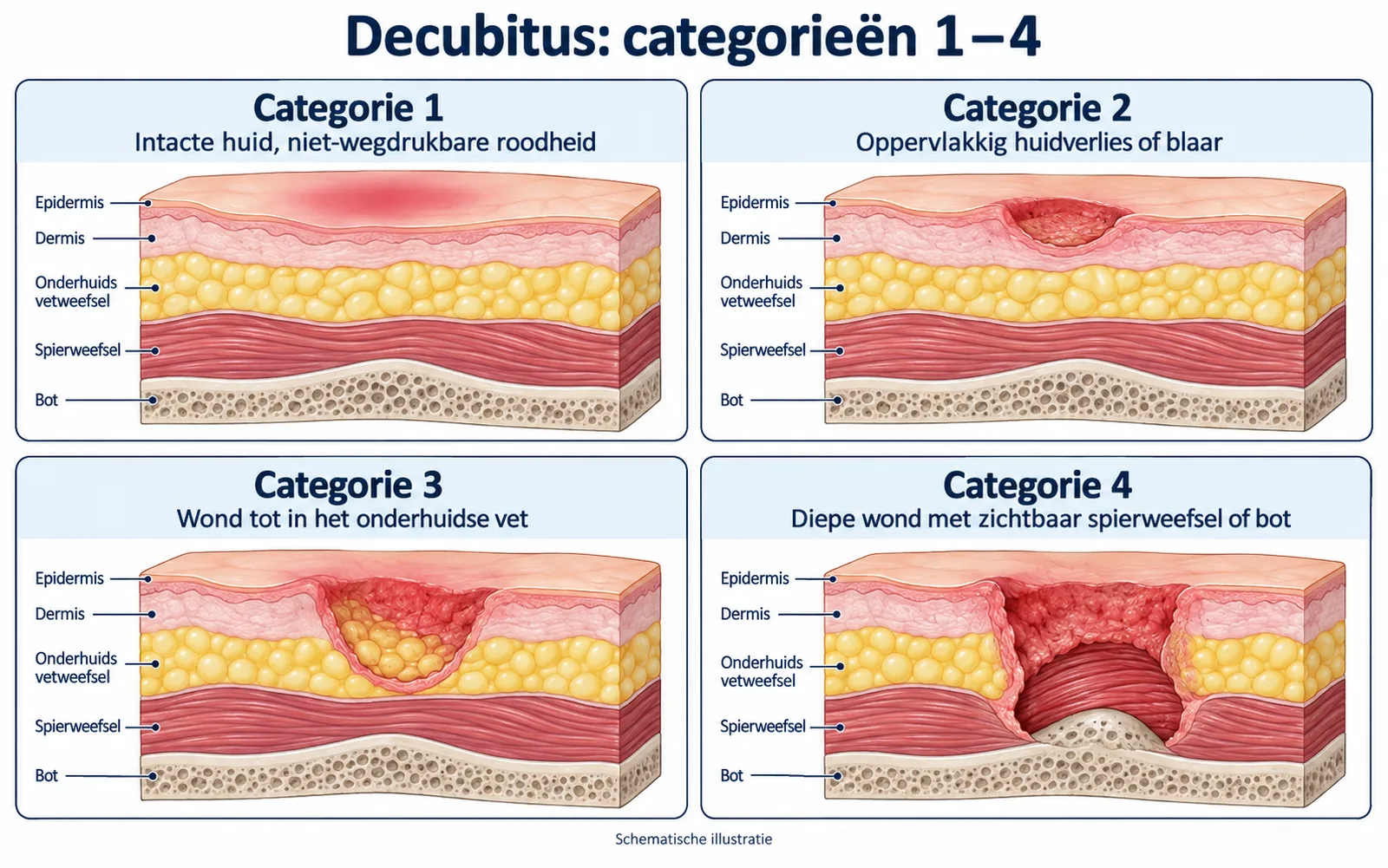
How do pressure sores develop?
The two culprits are pressure and shear: staying in the same position for a long time, and slumping or sliding over the mattress or chair. The risk is higher in people who move little or have reduced sensation, with poor nutrition, with moist skin from perspiration or incontinence, and with thin, fragile skin, as in older people. Pressure sores can develop quickly: sometimes within a few hours in the same position.
What can you do yourself?
Prevention is the core of the approach. Change position every three to four hours, or more often at higher risk, and lift rather than slide when moving. Pressure-relieving aids such as an anti-pressure mattress or a seat cushion spread the load. Keep the skin clean and dry, and check the pressure points daily, with extra attention to the tailbone and the heels. Good nutrition and enough fluids help keep the skin strong. If you care for someone who is bedridden, ask the district nurse for advice on positions and aids.
When to see a doctor?
Not sure whether this needs a look? Have a dermatologist assess it: you get an answer within 12 to 48 hours, no referral needed. In an emergency, contact your GP straight away or call 112.
Get help as soon as a red patch stays red when you press it: take the pressure off and consult the GP or district nurse about mattress, positioning and skin care. A blister, an open area or a dark discolouration of the skin always calls for an assessment and a wound care plan; deep pressure wounds heal slowly and need professional wound care. Make contact quickly with fever or if the wound looks dirty or starts to smell. An online consultation can help with doubt about a skin patch at an early stage; the treatment of a pressure wound itself is hands-on care and runs through the GP and district nursing.
Please note
An open area, a black discolouration or fever with a pressure sore? Contact the GP or district nurse the same day: a deep pressure wound does not heal by itself.
Have a dermatologist look at your skin
Upload photos and answer a few questions. A BIG-registered dermatologist replies within 12 to 48 hours, no referral needed, from € 39.
If more is needed, the dermatologist refers you to a medical specialist.
Want to know what a dermatologist does, when you can see one and how quickly that can happen? Read more about the dermatologist.
Frequently asked questions
How do I recognise an early pressure sore?
By a red patch on a pressure point that can feel painful or burning and that stays red when you press on it. That is the moment to take the pressure off and change position; this prevents the skin from breaking.
How quickly can pressure sores develop?
Faster than many people think: with high pressure and fragile skin sometimes within a few hours in the same position. That is why regularly changing position is so important, at night too, and especially during hospital stays or bed rest at home.
What is the best way to prevent pressure sores?
Changing position every three to four hours without sliding, using pressure-relieving aids such as a good mattress or seat cushion, keeping the skin clean and dry and checking the pressure points daily. Good nutrition and enough fluids support the skin.
Does a pressure wound heal by itself?
An early red patch recovers if the pressure is taken off in time. An open pressure wound does not heal by itself as long as the pressure remains, and needs professional wound care with a treatment plan. The deeper the wound, the slower the healing.
When should you see a doctor about a pressure sore?
For a red patch that stays red when you press it and does not recover after pressure relief, for any blister, open area or dark discolouration, and immediately with fever or a wound that looks dirty or smells. The GP and district nurse set up the wound care plan together.
Sources and more information
Skin tips from a dermatologist?
Sign up for our newsletter.