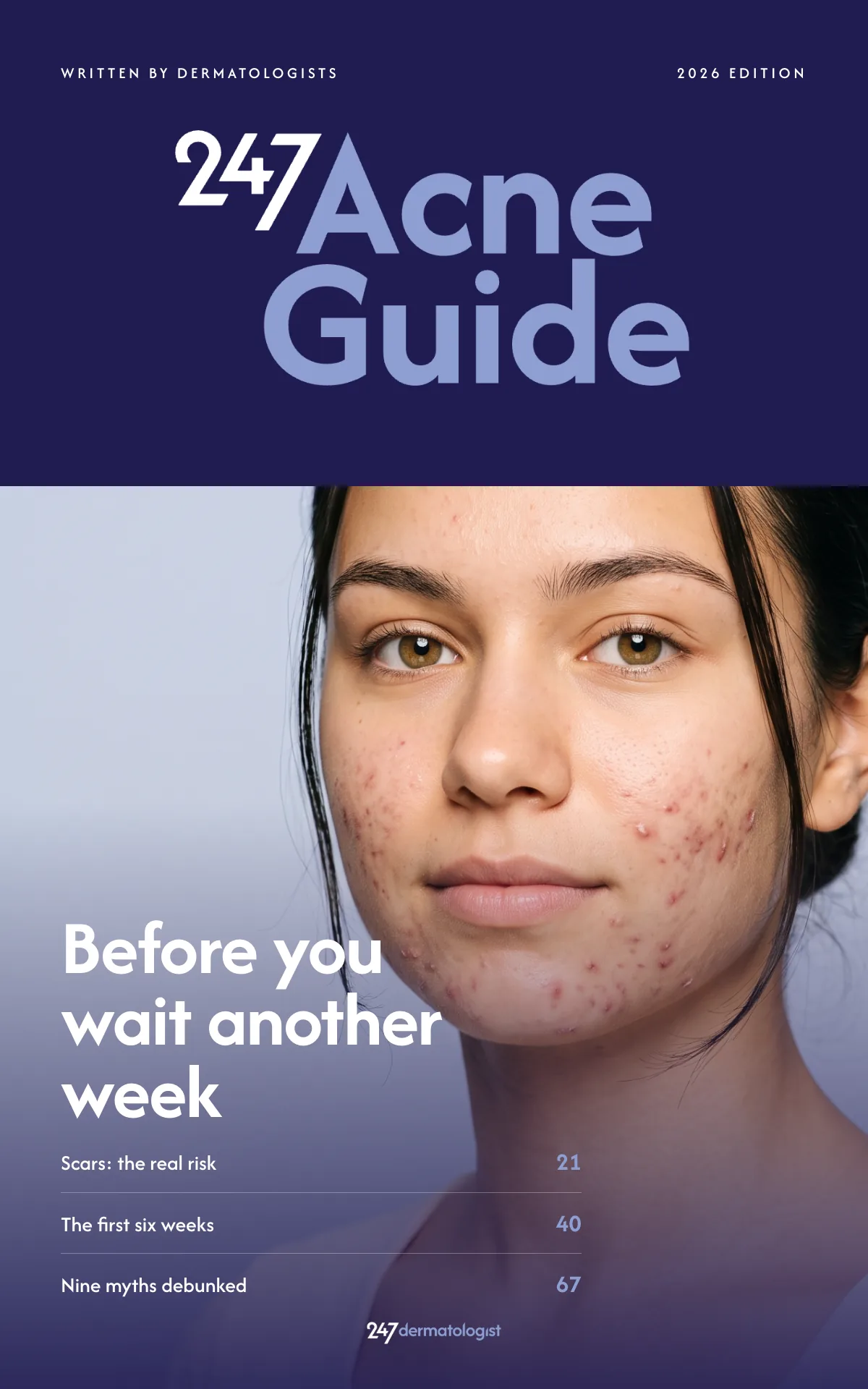
Medically reviewed by Dr. A.M. van Coevorden, dermatologist, on
Adult acne (acne tarda)acne after your mid-twenties
Acne often starts during puberty, but certainly not always. When acne first appears after the age of twenty-five, we call it acne tarda, also known as late-onset or adult acne. It is more common in women, for example after stopping the pill or while using a hormonal coil. The spots usually sit on the chin, jawline and neck and can be stubborn. Effective treatments exist for this form too.
Reply within 12 to 48 hours · no referral needed · from € 39
How do you recognise adult acne?
Typical signs are deeper, often painful bumps on the jawline, chin and neck and around the mouth. In women the pattern often follows the cycle. It is most common in adult women, but not exclusive to them.
Why do you get acne as an adult?
Certain hormones stimulate the sebaceous glands. Fluctuations, for example around your cycle, after stopping or switching contraception, or during menopause, can therefore trigger flare-ups. Persistent stress plays a part as well: the stress hormone cortisol stimulates the sebaceous glands.
There is often a genetic component too. In about half of the people with acne tarda, a parent had it as well. Sometimes acne tarda fits with a hormonal condition such as PCOS.
Also read our detailed page on hormonal acne.
Is a hormone test needed?
Usually not. In most women with adult acne, hormone levels are normal. Their skin is more sensitive to normal hormonal fluctuations. A test is only useful when there are other signs, such as an irregular cycle or excessive hair growth. That combination can point to PCOS, and a doctor assesses that.
How is adult acne treated?
Adult acne responds well to treatment. A dermatologist recognises the pattern from your photos and your story, and draws up a treatment plan that fits your situation. This may involve topical treatments or other options prescribed and monitored by a doctor. What you do not need to wait for: it clearing on its own. With a hormonal component, acne can persist for years.
What can you do yourself?
Do not squeeze spots, wash your skin with lukewarm water and a soap-free cleanser, and avoid oil-based products. If you wear make-up, choose oil-free products and remove them at the end of the day.
Frequently asked questions about adult acne
Not sure whether this needs a look? Have a dermatologist assess it: you get an answer within 12 to 48 hours, no referral needed. In an emergency, contact your GP straight away or call 112.
I am 40 and still have acne. What could be the cause?
Acne can persist or appear at any adult age. A hormonal component is often involved and there is often a genetic predisposition. Medicines, stress and skin products can play a part too. A dermatologist looks at the whole picture and tells you what works in your situation.
What are the signs of acne in adult women?
Deeper, often painful bumps on the jawline, chin and neck, with a pattern that follows the cycle. Often more stubborn than teenage acne, but it responds well to treatment.
Is my acne caused by the pill?
Starting, switching or stopping contraception can influence acne, in both directions. If your acne returned after stopping, that is a well-known pattern. Always discuss your contraception with your own doctor.
Does adult acne clear on its own?
Sometimes, but it can also persist for years. Because it responds well to treatment, waiting is usually not necessary.
Is acne tarda the same as hormonal acne?
They overlap strongly. Acne tarda describes the age at which the acne starts (after the age of 25), hormonal acne describes the driver. Adult acne often, but not always, has a hormonal background.
Have a dermatologist look at your skin
Upload photos and answer a few questions. A BIG-registered dermatologist replies within 12 to 48 hours, no referral needed, from € 39.
If more is needed, the dermatologist refers you to a medical specialist.
Want to know what a dermatologist does, when you can see one and how quickly that can happen? Read more about the dermatologist.
Sources and more information
Skin tips from a dermatologist?
Sign up for our newsletter.