Written by the 247dermatologist editorial team, medically reviewed by Dr A.M. van Coevorden, dermatologist
Reviewed on 29 July 2026About 3 minutes to read
How hormones affect your skin
Certain hormones stimulate the sebaceous glands. Fluctuations, for example around your cycle, after stopping or switching contraception, or during menopause, can therefore trigger acne flare-ups. Acne that only appears after the age of 25 also often has a hormonal background. Persistent stress plays a part as well: the stress hormone cortisol stimulates the sebaceous glands.
How to recognise hormonal acne
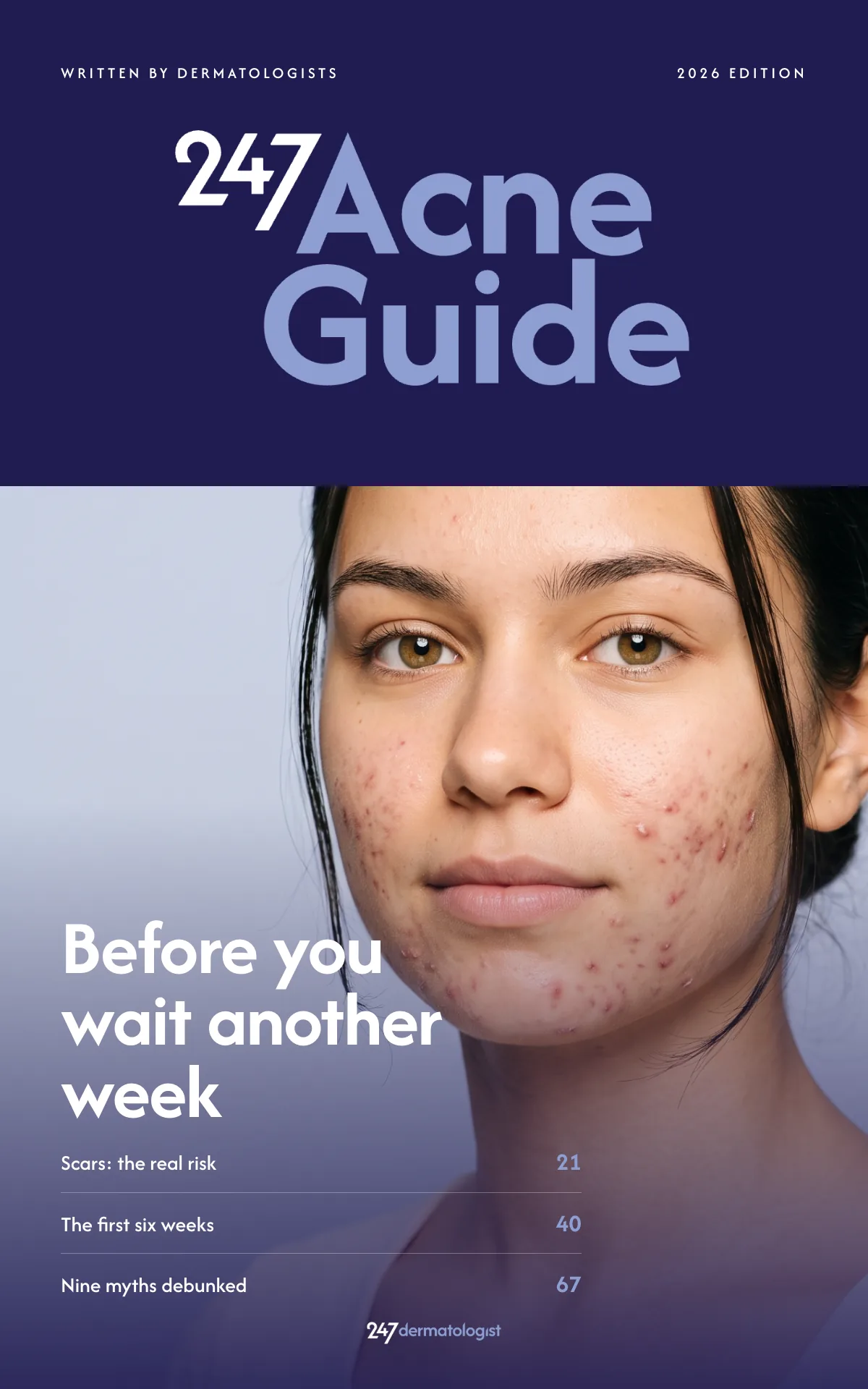
Typical signs include deeper, often painful bumps on the jawline, chin, neck and around the mouth, following a pattern that changes with your cycle. It is most common in adult women, but not exclusive to them.
Is a hormone test needed?
Usually not. In most women with hormonal acne the hormone levels are simply normal; the skin just reacts more sensitively to normal fluctuations. A test is only useful when there are other signs, such as an irregular cycle or excessive hair growth. That combination can point to PCOS, and a doctor assesses that.
What can be done
Hormonal acne responds well to treatment. A dermatologist recognises the pattern from your photos and your story, and draws up a treatment plan that fits your situation. This may involve topical treatments or other treatments prescribed and monitored by a doctor. You do not need to wait for it to clear on its own. With a hormonal component, acne can persist for years.
For adult women with acne, especially when hormones play a role, the European guideline has mentioned an additional treatment option in tablet form since 2025. Your dermatologist will discuss whether it is right for you.
Do you recognise this pattern?
A dermatologist assesses your skin within 12 to 48 hours and tells you what works in your situation.
start a consultationFrequently asked questions
Is a hormone test useful for acne?
Usually not. In most women with hormonal acne the hormone levels are normal. Only with additional signs, such as an irregular cycle or excessive hair growth, is testing useful; discuss that with a doctor.
Is my acne caused by the pill?
Starting, switching or stopping contraception can influence acne, in both directions. If your acne returned after stopping, that is a well-known pattern. Always discuss your contraception with your own doctor.
Does hormonal acne pass on its own?
Sometimes, but it can also persist for years. Because it responds well to treatment, waiting is usually not necessary.
Further reading
Sources
- NVDV
- NHG Practice Guideline Acne
- Collier et al., Journal of the American Academy of Dermatology, 2008.
Last revised on 29 July 2026
Have a dermatologist take a look
Upload photos and describe your symptoms. A BIG-registered dermatologist will provide a treatment plan within 12 to 48 hours.
start a consultationSkin tips from a dermatologist?
Sign up for our newsletter.