Medically reviewed by Dr. A.M. van Coevorden, dermatologist, on
Cystic acnedeep, painful bumps
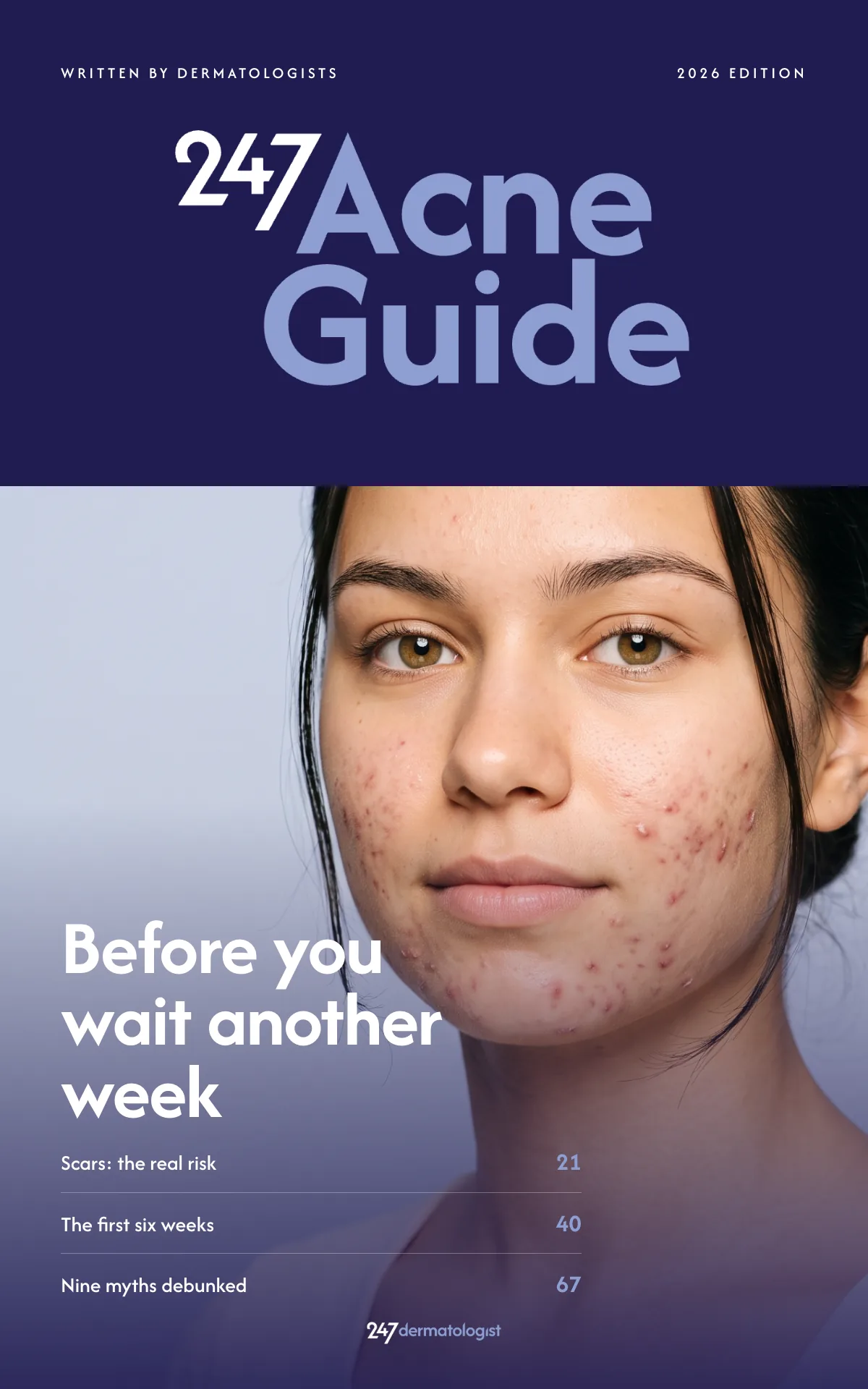
Cystic acne is a severe form of acne in which the inflamed lesions lie deep within the skin. Large, red and painful bumps develop that can be filled with pus. The swelling is often stronger, the risk of scarring higher, and the pain can be present even without touching the skin. With this form in particular, treating in time makes the difference.
Reply within 12 to 48 hours · no referral needed · from € 39
How do you recognise cystic acne?
An ordinary pimple sits at the surface and often has a white or yellow head. A cyst lies deep under the skin: you feel a large, often painful bump, while there is sometimes little to see at the surface. The pain can be there even without touching.
What causes cystic acne?
The start is the same as with other acne: a hair follicle becomes blocked, bacteria can multiply and inflammation follows. In cystic acne that inflammation runs deeper and more severely. Hormones and genetic predisposition are the main causes, and hormonal fluctuations can trigger flare-ups, often around the chin and jawline.
Why squeezing does extra harm here
Squeezing pushes the inflammation deeper into the skin, causes more inflammation and increases the risk of scarring. With deep, painful bumps that risk is at its highest. So leave them alone, tempting as it may be.
How is cystic acne treated?
Deep, severe acne almost always needs treatment through a doctor. Over-the-counter products mainly work at the surface of the skin and usually do too little for deep inflammation. For severe acne the dermatologist can start a tablet treatment. The right treatment depends on the type of acne, the severity and the risk of scarring. Early assessment pays off: preventing scars is a full treatment goal.
Cystic acne on the back, chin and jawline
Acne is not limited to the face. The back, chest and shoulders are the next most common areas. Deep, painful bumps around the chin and jawline often fit with a hormonal component. The location of the acne counts in the treatment plan.
Preventing scars
The longer a deep inflammation stays active, the greater the chance of permanent damage. Early treatment is the best scar prevention there is. If you see deep, painful bumps, have your skin assessed.
Frequently asked questions about cystic acne
Not sure whether this needs a look? Have a dermatologist assess it: you get an answer within 12 to 48 hours, no referral needed. In an emergency, contact your GP straight away or call 112.
What is cystic acne?
A severe form of acne in which the inflamed lesions lie deep within the skin, with large, red and painful bumps that can be filled with pus.
How do you get rid of cystic acne?
With a treatment that matches the severity, usually through a doctor. Over-the-counter products usually do too little for deep inflammation. A dermatologist assesses your skin and draws up a treatment plan. The sooner, the smaller the risk of scarring.
Can you squeeze cystic acne?
No. The inflammation sits deep, squeezing pushes it even deeper into the skin and considerably increases the risk of scarring.
What is the difference between a cyst and a pimple?
A pimple sits at the surface and often has a white or yellow head. A cyst lies deep under the skin, is larger and often painful, even without touching.
Why do I have cystic acne on my back?
The back, chest and shoulders are the most common areas for acne after the face. About half of the people with facial acne also have acne on the trunk. The treatment is adjusted accordingly.
Have a dermatologist look at your skin
Upload photos and answer a few questions. A BIG-registered dermatologist replies within 12 to 48 hours, no referral needed, from € 39.
If more is needed, the dermatologist refers you to a medical specialist.
Want to know what a dermatologist does, when you can see one and how quickly that can happen? Read more about the dermatologist.
Sources and more information
Skin tips from a dermatologist?
Sign up for our newsletter.