Medically reviewed by Dr. A.M. van Coevorden, dermatologist
Vitiligowhite patches from pigment loss
Vitiligo is a skin condition in which pigment disappears from the skin, causing sharply defined white patches. About 1 in 100 people has vitiligo. It is not dangerous and not contagious, but its impact can be real. Read here what vitiligo is and which treatments exist.
Reply within 12 to 48 hours · no referral needed · from € 39
What is vitiligo?
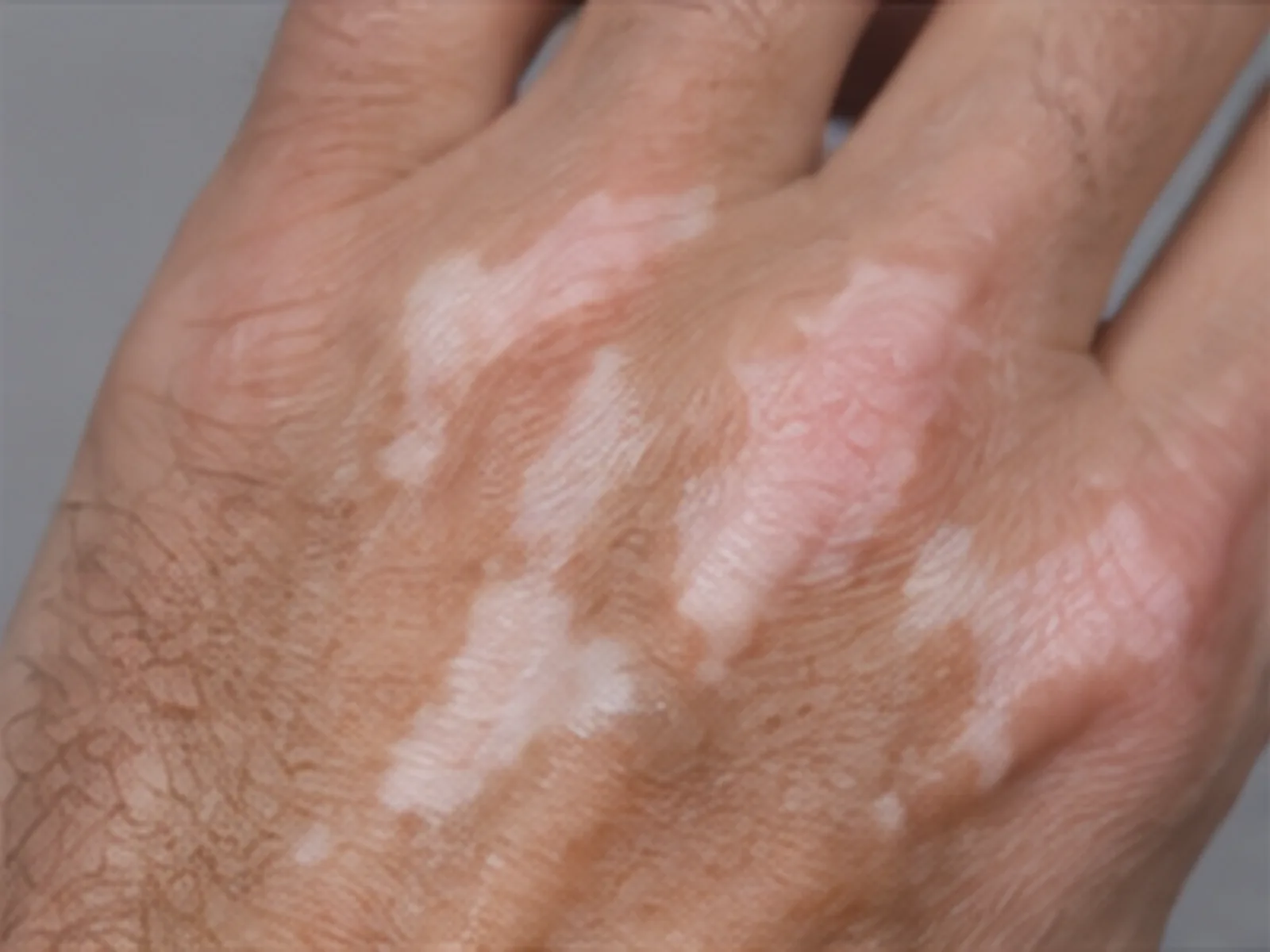
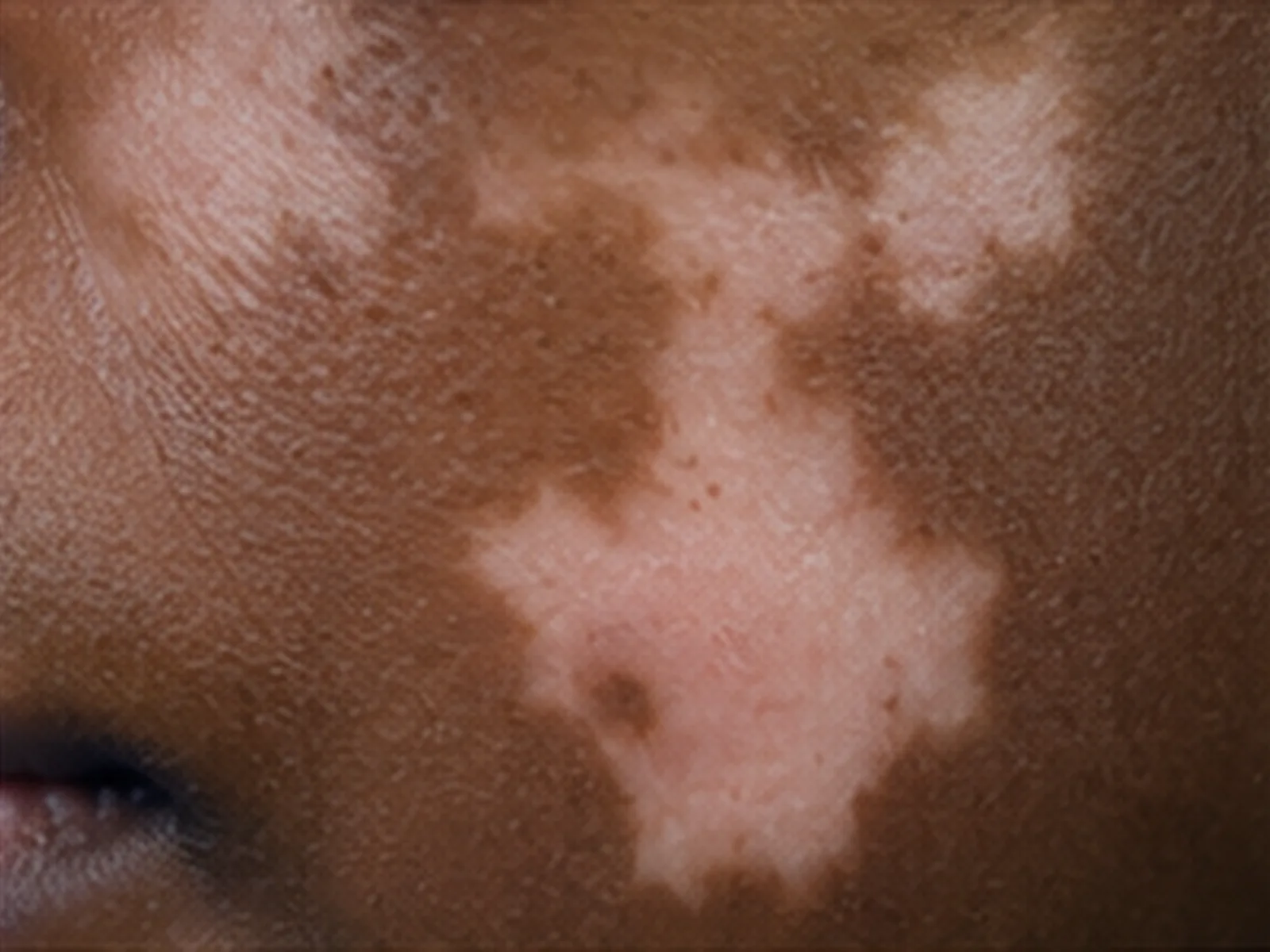
In vitiligo the colour (pigment) disappears from your skin. White patches appear and often spread slowly. The course is hard to predict: some people keep a few patches, in others it spreads. Vitiligo can start at any age; most people develop it before 30. About 1 in 100 people has vitiligo. Vitiligo is not contagious.
What causes vitiligo?
Your skin gets its colour from pigment cells (melanocytes). In vitiligo these cells stop working properly. The likely cause is your own immune system: it normally defends the body against bacteria, but in vitiligo it attacks the pigment cells. Predisposition plays a role. Vitiligo is somewhat more common within families, as are other autoimmune diseases such as thyroid disease and diabetes.
How do you recognise vitiligo?
The white patches can appear anywhere on the body, but are more common around body openings such as the mouth, the eyes and the genitals. The hands are often affected too. Hair inside a vitiligo patch can turn white. The patches sometimes itch.
How is the diagnosis made?
A dermatologist usually recognises vitiligo by the pattern of the patches. Additional tests are rarely needed. Only when another skin disease needs to be ruled out is a small piece of skin sometimes removed for examination (a biopsy), under local anaesthetic.
Which treatments exist?
Treatment is optional: vitiligo is harmless, and some people deliberately choose not to treat. If you do want treatment, there are four common routes. Important to know: no treatment always works. Most treatments work in about half of the people, and patches on the face often respond better than patches on the hands and feet. Treatments usually take a long time.
Cream. A corticosteroid cream or tacrolimus cream, once a day. The cream calms the immune system's attack on the pigment cells. Especially in early vitiligo this can stop the spread and bring pigment back; it takes several months to see whether it works.
Light therapy. Treatment with ultraviolet light (usually UVB) in a light cabin, two to three times a week, for months to sometimes years. Recovery shows as brown dots around the hairs. The tanning bed does not help. Light treatment carries a slightly higher risk of skin cancer.
Transplantation. With few patches, small pieces of healthy skin can be transplanted onto the vitiligo patches. This is only done when the vitiligo has been stable for at least a year.
The reverse method. In very extensive vitiligo the remaining coloured skin can be lightened (bleached) so the skin becomes even. Usually with a hydroquinone cream or a special pigment laser.
White hairs in a vitiligo patch almost never regain colour spontaneously. For most treatments it is not known whether the restored pigment remains after treatment stops. In some cases spontaneous improvement occurs.
What can you do yourself?
Protect the patches from the sun: vitiligo skin burns easily. Wear covering clothing or apply sunscreen with factor 15 or higher. That prevents burning, lowers the risk of skin cancer and makes the healthy skin contrast less with the white patches. Skin-coloured make-up can make the patches less visible; a skin therapist can help you with this. And do not underestimate the mental side: vitiligo can cause feelings of shame and affect your quality of life. Discuss it with your doctor if you would like support.
Frequently asked questions about vitiligo
Not sure whether this needs a look? Have a dermatologist assess it: you get an answer within 12 to 48 hours, no referral needed. In an emergency, contact your GP straight away or call 112.
Is vitiligo contagious?
No, vitiligo is not contagious.
Is vitiligo hereditary?
Predisposition plays a role. Vitiligo is somewhat more common within families, as are other autoimmune diseases such as thyroid disease and diabetes.
Do I need to treat vitiligo?
No. Vitiligo is harmless. If you do want treatment: most treatments work in about half of the people.
Can I go in the sun with vitiligo?
Yes, but protect the patches well: they burn easily. Use sunscreen with factor 15 or higher. The tanning bed does not help against vitiligo and is not advised.
Have a dermatologist look at your skin
Upload photos and answer a few questions. A BIG-registered dermatologist replies within 12 to 48 hours, no referral needed, from € 39.
If more is needed, the dermatologist refers you to a medical specialist.
Want to know what a dermatologist does, when you can see one and how quickly that can happen? Read more about the dermatologist.
Sources and more information
Related skin conditions
Melasma
Brown patches of pigmentation on the face, often triggered by sun and hormones.
Pityriasis versicolor
Lighter or darker scaly patches on the trunk caused by a yeast.
Moles
Harmless brown spots of pigment, some worth keeping an eye on.
Bier spots
Small pale spots that disappear under pressure, a benign vascular phenomenon.
Skin tips from a dermatologist?
Sign up for our newsletter.