Medically reviewed by Dr. A.M. van Coevorden, dermatologist
Actinic keratosisrough patches from years of sun damage
Actinic keratoses are rough patches on the skin caused by years of sun damage. They appear mainly where the skin has had a lot of sun, such as the face, the bald scalp and the backs of the hands. People with actinic keratoses have a raised risk of skin cancer, which is why they are usually treated.
Reply within 12 to 48 hours · no referral needed · from € 39
- What are actinic keratoses?
- What do actinic keratoses look like?
- How do you get actinic keratoses?
- Are actinic keratoses contagious?
- How is the diagnosis made?
- Do they need to be treated?
- What treatments are there?
- What can you do yourself?
- What is the risk of skin cancer?
- Frequently asked questions about actinic keratosis
What are actinic keratoses?
Actinic keratoses are patches on the skin caused by sun damage. They appear mainly on parts of the body that have often been in the sun, such as the face, the bald scalp and the backs of the hands. People with actinic keratoses have a raised risk of developing skin cancer.
What do actinic keratoses look like?
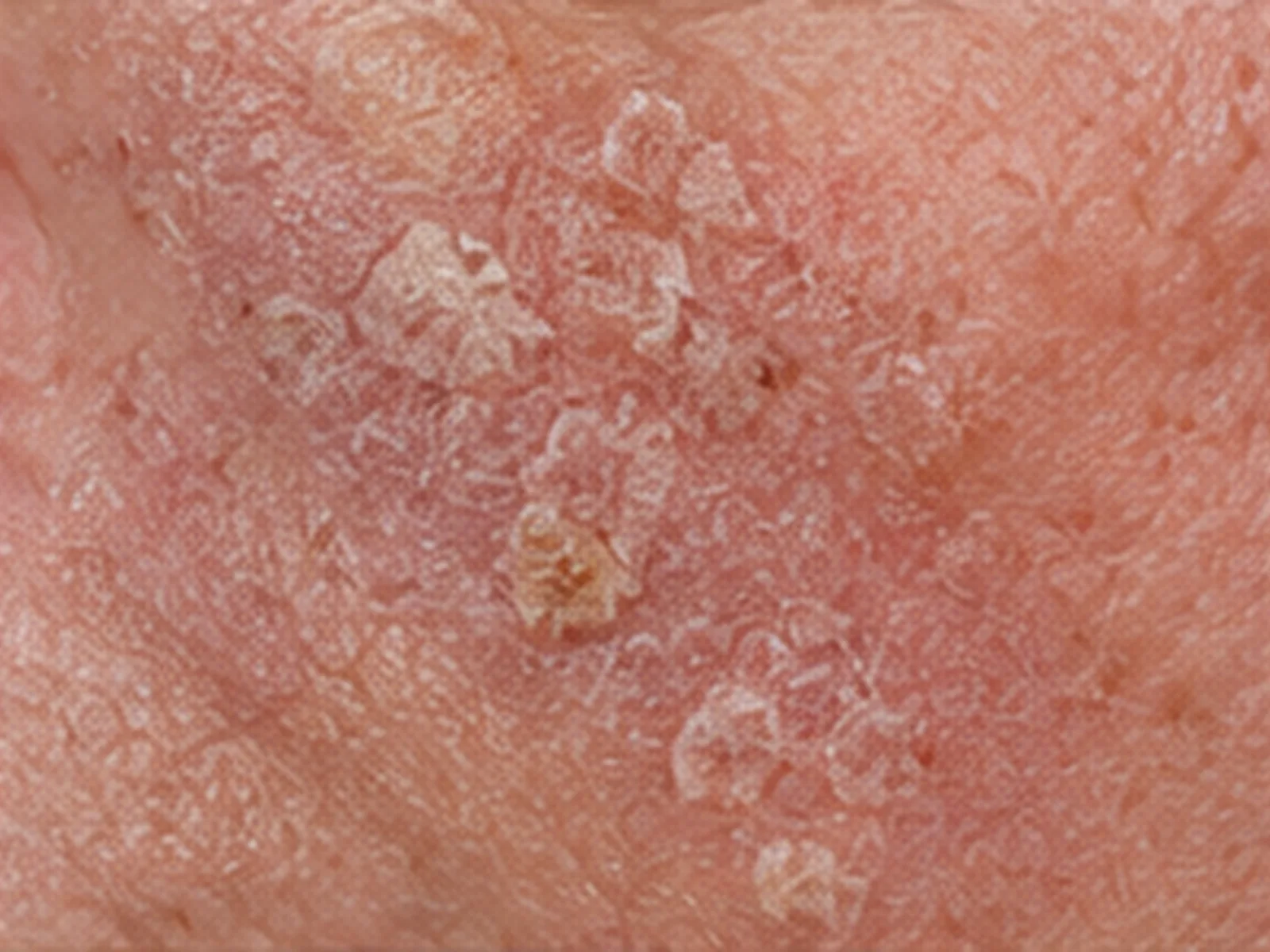
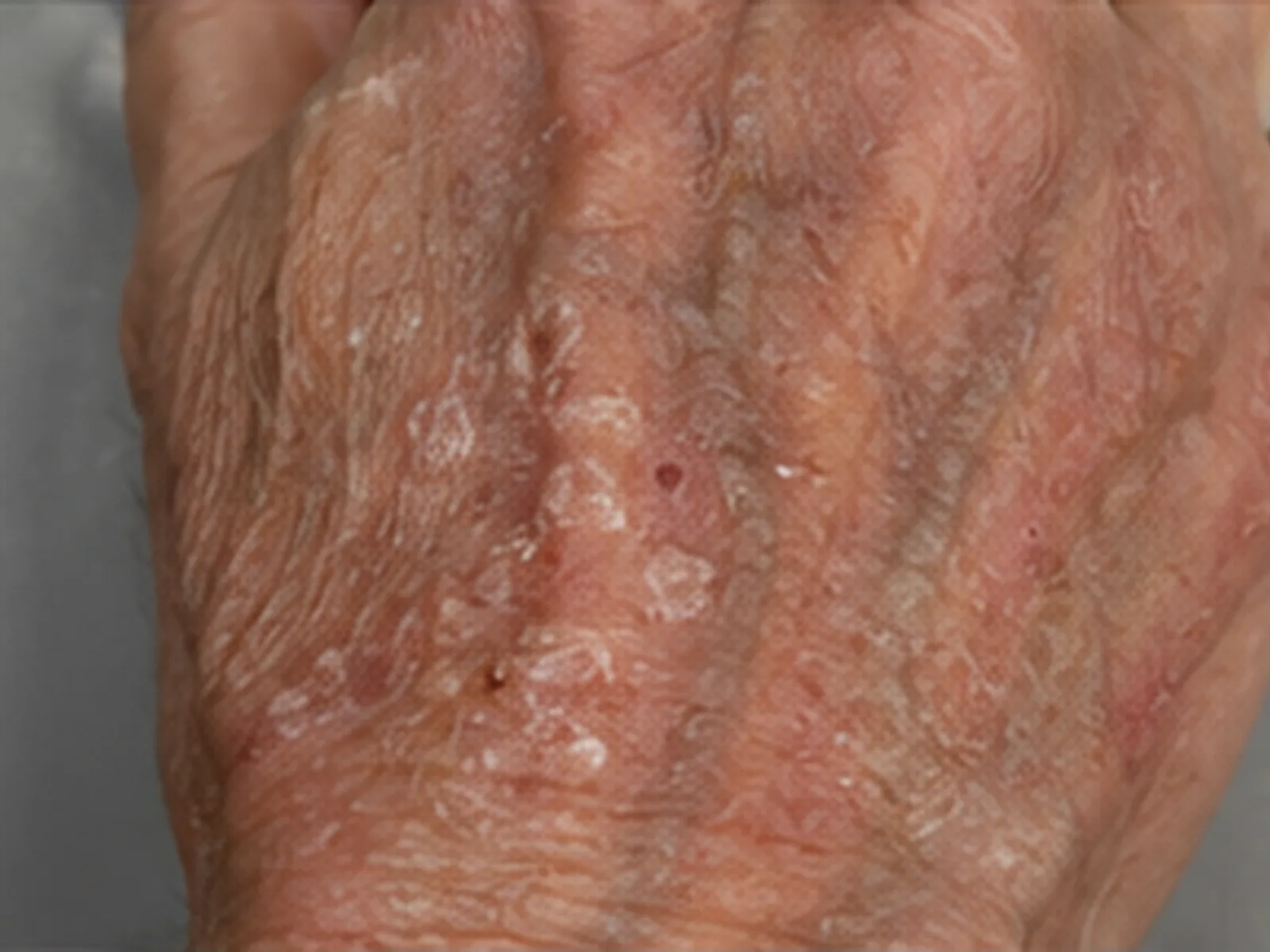
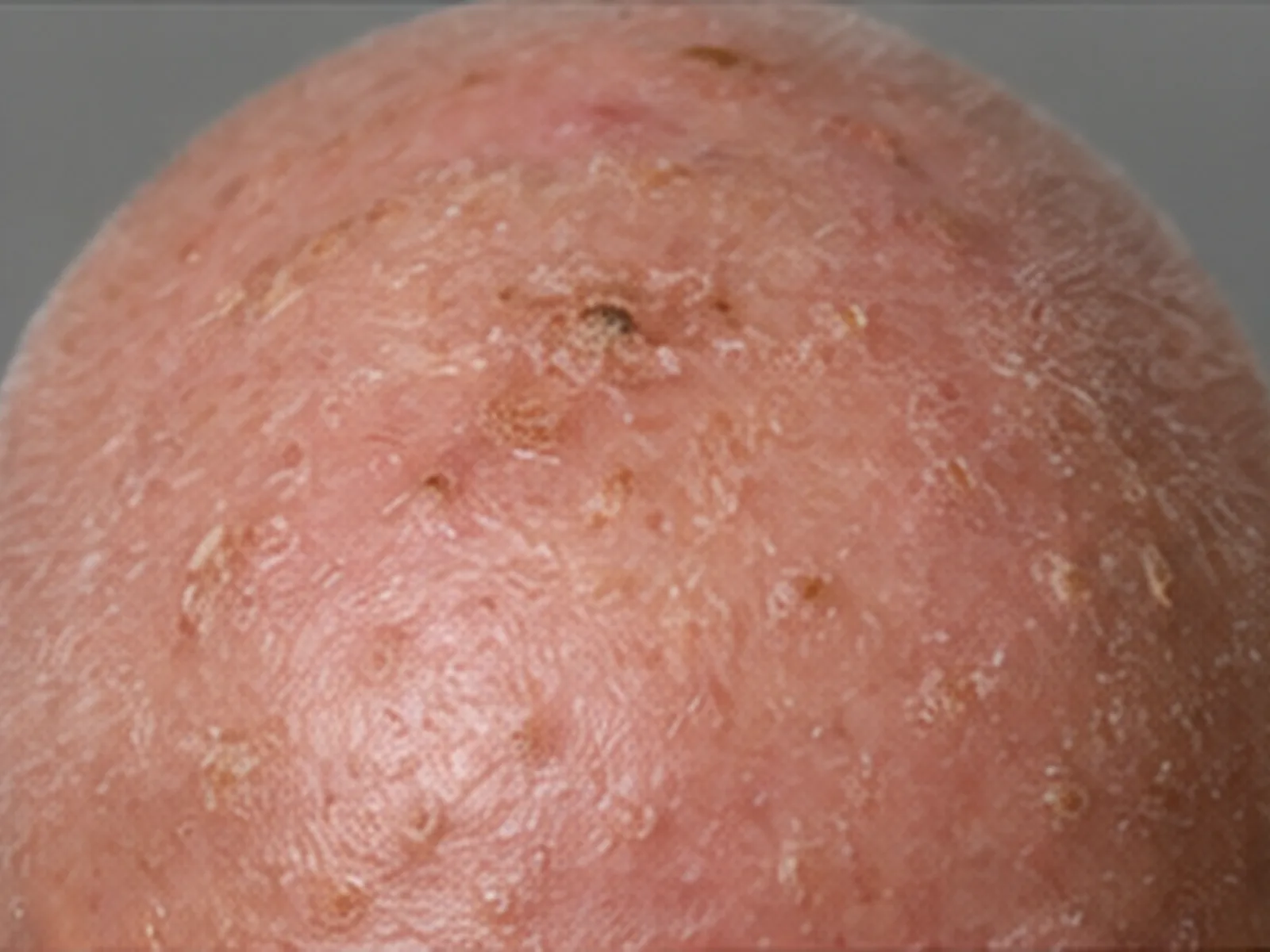
Actinic keratoses usually look like rough patches, skin-coloured to red or brown, from a few millimetres to a few centimetres across. Early on they are easier to feel than to see. People often say that hard scales keep forming on the same spot, and the patches are sometimes tender to the touch. There are often several. They appear mainly on the face, the bald scalp, the backs of the hands, the forearms, the shins and, in women, the décolletage.
How do you get actinic keratoses?
You get actinic keratoses from excessive exposure to the sun or a sunbed. Besides the amount of sun, your skin type matters: people with fair skin, blond or red hair and blue eyes are more likely to get them than people with dark skin. The older you are, the greater the chance; up to 80% of fair-skinned people over 60 have actinic keratoses.
Are actinic keratoses contagious?
No. Actinic keratoses are caused by years of sun damage and cannot be passed from person to person.
How is the diagnosis made?
The doctor can usually tell from the patches whether they are actinic keratoses. Sometimes the doctor wants to rule out another skin disease and removes a small piece of skin under local anaesthetic for examination.
Do they need to be treated?
Actinic keratoses are usually treated. You and your doctor may decide not to treat them, for example with few patches that you can keep an eye on yourself. Reasons to treat: they cause itching or irritation, or you are concerned about their appearance, or there are many of them. Many actinic keratoses are linked to a higher risk of skin cancer, and treatment is expected to lower that risk and make skin cancer easier to spot.
What treatments are there?
There are several options, depending on the number and thickness of the patches.
Freezing with liquid nitrogen is the preferred treatment for one to a few patches; it is briefly painful and the skin heals in about a week.
Curettage and electrocoagulation (scraping under anaesthetic and cauterising) is used for thicker patches.
Fluorouracil cream also targets patches that are not yet visible; marked redness and crusting are part of it working well. How often and how long you apply it is set out in the treatment plan from your doctor.
Imiquimod cream activates the immune system and can cause flu-like symptoms.
Photodynamic therapy applies a cream that is activated with a lamp, destroying the abnormal cells; there is also a daylight version that can be done at home when weather conditions are suitable.
Laser vaporises the cells, and a chemical peel removes the top layer of skin for extensive patches.
What can you do yourself?
Protect your skin in the sun with clothing and a hat, and apply sunscreen of at least factor 30 to uncovered skin, preferably in the morning before dressing and more often if you are outside all day. Do not use a sunbed and do not sunbathe excessively. Keep a close eye on your skin. See your GP or dermatologist if an existing patch becomes larger, thicker or more painful, if you get a bump that keeps growing, or if you have a non-healing wound. Benign spots should clear on their own within six to eight weeks.
What is the risk of skin cancer?
Sometimes skin cancer develops in an area of actinic keratoses, usually a squamous cell carcinoma. That is usually thicker and more painful than an actinic keratosis and can be redder, break open or bleed. Basal cell carcinomas also occur. With fewer than five actinic keratoses the risk of a squamous cell carcinoma is about 1%, with more than twenty it is about 20%.
Frequently asked questions about actinic keratosis
Not sure whether this needs a look? Have a dermatologist assess it: you get an answer within 12 to 48 hours, no referral needed. In an emergency, contact your GP straight away or call 112.
Are actinic keratoses skin cancer?
No, they are a precancerous stage caused by sun damage. There is a raised risk that skin cancer develops in them, usually a squamous cell carcinoma.
How do I recognise them?
As rough patches on sun-exposed skin, skin-coloured to red or brown, easier to feel than to see early on, where hard scales keep forming.
Do they need treating?
Usually yes, to reduce symptoms and lower the risk of skin cancer. With few patches you can decide together to keep an eye on them yourself.
What treatments are there?
Freezing with nitrogen, creams (fluorouracil or imiquimod), photodynamic therapy, laser, curettage or a chemical peel, depending on number and thickness.
How do I prevent new patches?
Protect the skin from the sun with clothing, a hat and sunscreen of at least factor 30, and avoid the sunbed.
Have a dermatologist look at your skin
Upload photos and answer a few questions. A BIG-registered dermatologist replies within 12 to 48 hours, no referral needed, from € 39.
If more is needed, the dermatologist refers you to a medical specialist.
Want to know what a dermatologist does, when you can see one and how quickly that can happen? Read more about the dermatologist.
Sources and more information
Skin tips from a dermatologist?
Sign up for our newsletter.